Image
Category
Collection
Object type
Material
Maker
Place
Date
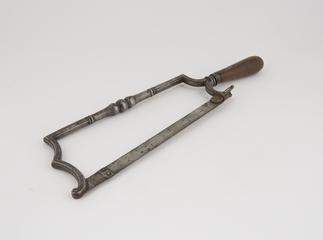
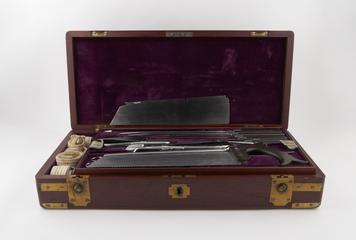
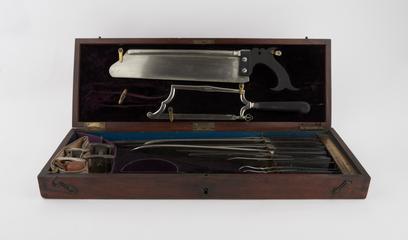
Post mortem saw

Post mortem saw

1820-1860

Brain knife from post mortem set

Brain knife from post mortem set

1820-1860

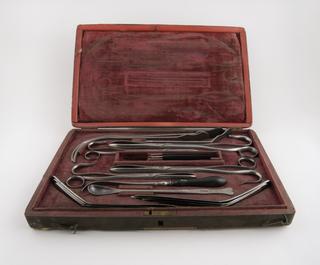
Dissecting scissors from post-mortem set

Dissecting scissors from post-mortem set

1820-1860

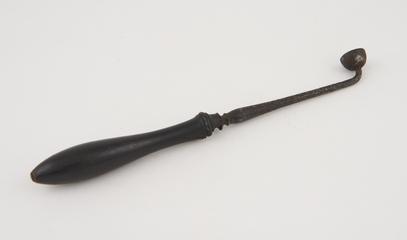
Post-mortem hammer

Post-mortem hammer

1820-1860

Micro-6 TM Ureteroscope MR-6

Micro-6 TM Ureteroscope MR-6

1980-1989

Mitral and aortic replacement heart valves, 1960s.

Mitral and aortic replacement heart valves, 1960s.

1968-1969

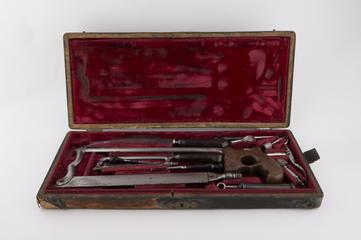
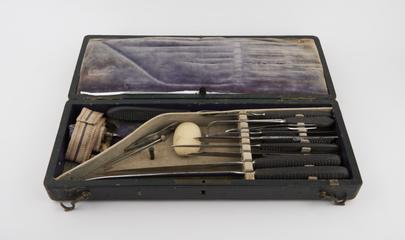
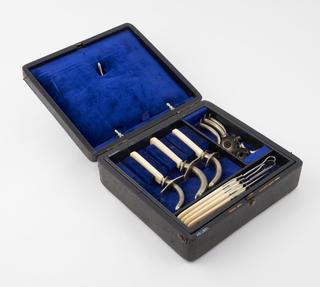
Case for post mortem set

Case for post mortem set

1820-1860

Bowel Scissors from post-mortem set

Bowel Scissors from post-mortem set

1820-1860

Knives from post mortem set

Knives from post mortem set

1820-1860

Charriere-type double spine saw

Charriere-type double spine saw

1820-1860

Scalpels from post mortem set

Scalpels from post mortem set

1820-1860

Lithotomy set, English, 1780-1820

Lithotomy set, English, 1780-1820

1780-1820

Skin-grafting razor, English, second half of the 19th century.

Skin-grafting razor, English, second half of the 19th century.

1851-1900

Set of tracheotomy instruments, 1871-1900.

Set of tracheotomy instruments, 1871-1900.

1871-1900

Bryant's torsion forceps, about 1860-1900.

Bryant's torsion forceps, about 1860-1900.

1860-1900

Amputation set, 19th century.

Amputation set, 19th century.

1801-1900

Set of tracheotomy instruments, mid 19th century.

Set of tracheotomy instruments, mid 19th century.

1831-1870

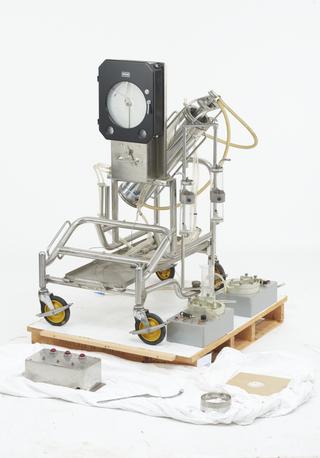
Refrigeration and Heating Unit for The Westminster Profound Hypothermia Unit, 1960s.

Refrigeration and Heating Unit for The Westminster Profound Hypothermia Unit, 1960s.

1959-1961

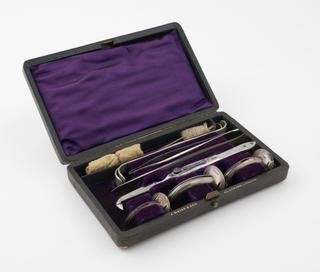
instrument cases

instrument cases

1871-1900

Amputation saws and bullet extractors, 16th-18th century.

Amputation saws and bullet extractors, 16th-18th century.

1651-1750

Amputation saws and bullet extractors, 16th-18th century.

Amputation saws and bullet extractors, 16th-18th century.

1601-1700

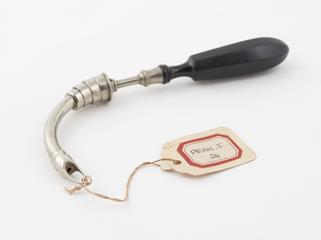
Pean's tracheotomy cannula carrier, French, c. 1901-1930.

Pean's tracheotomy cannula carrier, French, c. 1901-1930.

1901-1930

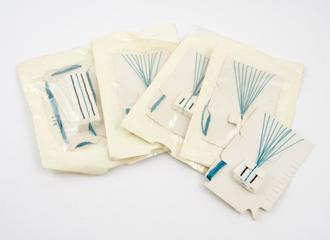
Surgical patties

Surgical patties

Amputation saws and bullet extractors, 16th-18th century.

Amputation saws and bullet extractors, 16th-18th century.

1501-1600

Surgical instrument set, probably 18th century.

Surgical instrument set, probably 18th century.

1701-1800

Mitral and aortic replacement heart valves, 1960s.

Mitral and aortic replacement heart valves, 1960s.

1968-1969

Amputation saws and bullet extractors, 16th-18th century.

Amputation saws and bullet extractors, 16th-18th century.

1651-1751

Naevus cautery

Naevus cautery

1801-1900

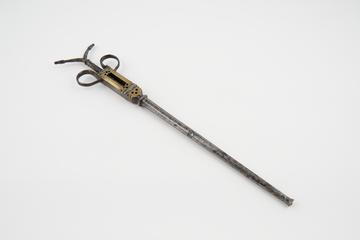
Amputation saw, 17th Century.

Amputation saw, 17th Century.

1601-1700

Two pairs of ancient Roman scissors.

Two pairs of ancient Roman scissors.

201-500 CE

Surgical instrument set, mid 19th century.

Surgical instrument set, mid 19th century.

1831-1870

Box of amputation instruments, German, 1831-1870.

Box of amputation instruments, German, 1831-1870.

1831-1870

Bottle for mitral and aortic replacement heart valves, 1960s.

Bottle for mitral and aortic replacement heart valves, 1960s.

1968-1969

Heat Exchanger with controls and blood pumps for "The Westminster Profound Hypothermia Unit" for cardiac surgery, developed by Charles Drew at Westminster Hospital, c.1960.

Heat Exchanger for The Westminster Profound Hypothermia Unit, 1960s.

1959-1961

Surgical instrument set, mainly trephination, with two amputation instruments, in leather case, 18th century

Brambilla's textbook of military surgery, 1782 with 18th century surgical instruments.

1701-1800

Laryngeal lancet, MacKenzie, steel, nickel plated, by Down Bros. of London, early 20th century

Laryngeal lancet, early 20th century.

1901-1930

Amputation knife by Cargill, c. 1750

Amputation knife with trade card, c. 1750.

1739-1789

Laryngeal forceps, MacKenzie, steel, nickel plated, by Down Bros. of London, early 20th century

Laryngeal forceps, early 20th century.

1901-1930

Mahogany case for surgical instrument set, by Savigny and Co., 1810-1850

Surgical instrument set, London, England, 1810-1812

1810-1812

Case for Persian surgical instruments

Surgical instrument case

1701-1800

Tonsil guillotine, possibly Fahnestock's, steel and ebonite by Mathieu of Paris, mid 19th century

Tonsil guillotine, French, mid 19th century.

1831-1870

Throat brush, possibly MacKenzie, ebony, aluminium(?), probably British, late 19th century

Laryngeal instruments, late 19th-early 20th century.

1871-1900

Frere Come's single-bladed lithotane with curved blade, spring handle and bulbous mahogany handle, by Eanis(?), c. 1780

Frere Come's single bladed lithotome, c. 1780.

1701-1850

Mahogany case for amputation set, of instruments by Arnold and Son of London, 1866 to 1871

Steel and ivory amputation set, 1866-1871.

1866-1871

Tweezers, metal with bone or ivory handle, Persian, 18th century

Surgical tweezers

1701-1800

MacKenzie's laryngeal ecraseur, plated steel and ebony, probably British, late 19th century

Laryngeal instruments, late 19th-early 20th century.

1871-1900

Cylinder for anaesthetic gas, made in Paris, French, 1860-1940

Cylinder for ethyl chloride anaesthetic spray

1860-1940

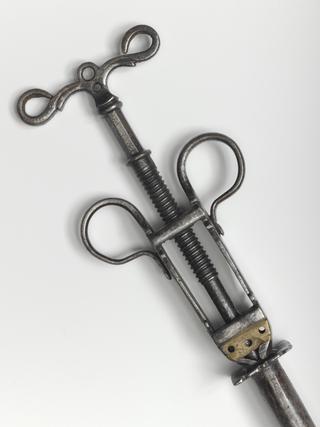
Bullet extractor, steel, incomplete, 17th century

Steel bullet extractor, 17th century.

1601-1700

MacKenzie's laryngeal electrode wood, metal and gum elastic, probably British, c. 1900

Laryngeal instruments, late 19th-early 20th century.

1890-1910

InSite Vision tower composing of metal wheeled tower, Xenon Fibreoptic Light source and cable by Intuitive Surgical, Camera Control Unit, GP-US522 by Pansonic, Trinitron Colour Video Monitor and power cable, model number PVM-1953MD, serial number 2002264, made in Japan, 1995 from da Vinci® Classic surgical system for robot assisted minimally invasive surgery used by Lord Ara Darzi in 2001 to perform the first clinical case using a da Vinci system in the UK, made by Intuitive Surgical, Inc, United States, 1999-2001

InSite Vision tower, from da Vinci® Classic surgical system

1999-2001