Image
Category
Collection
Maker
On Display
Object type
Place
Material
Date
Wheatstone concertina

Wheatstone concertina

1829-1851

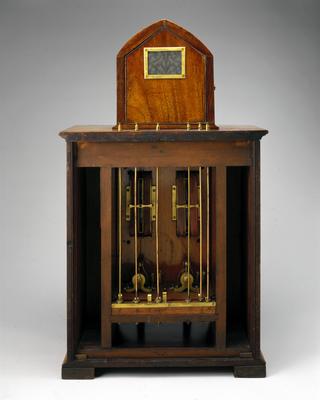
Cooke and Wheatstone's four needle telegraph, 1838

Cooke and Wheatstone's four needle telegraph, 1838

1838

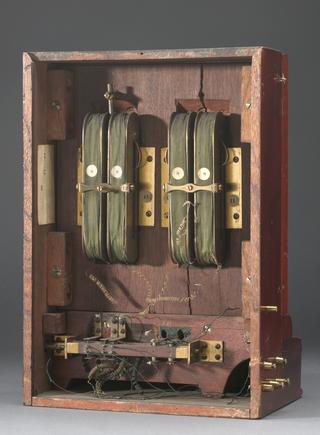
Cooke and Wheatstone's double needle telegraph, 1844

Cooke and Wheatstone's double needle telegraph, 1844

1844

Cooke and Wheatstone’s double-needle telegraph, 1838

Cooke and Wheatstone’s double-needle telegraph, 1838

1838

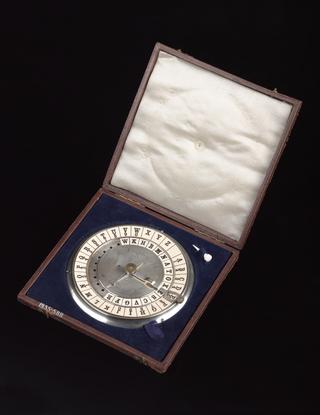
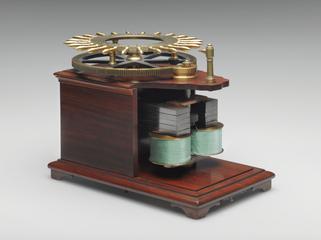
Cryptograph (coding and decoding machine) by Sir Charles Wheatstone, 1843-1875

Cryptograph (coding and decoding machine) by Sir Charles Wheatstone, 1843-1875

1843-1875

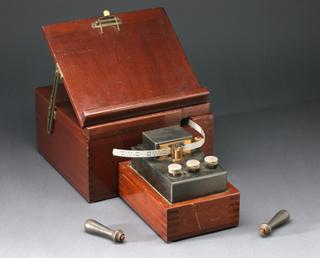
Hand perforator and copy stand for Wheatstone automatic telegraph system, 1890-1910

Hand perforator and copy stand for Wheatstone automatic telegraph system, 1890-1910

1890-1910

Cooke and Wheatstone double needle telegraph, 1844

Cooke and Wheatstone double needle telegraph, 1844

1844

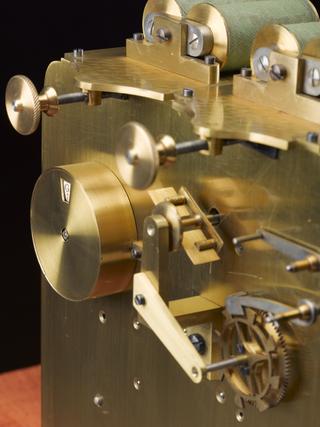
Wheatstone ABC telegraph receiver, 1942

Wheatstone ABC telegraph receiver, 1942

1842

Section of first telegraph cable, 1837

Section of first telegraph cable, 1837

1837

Wheatstone printing telegraph, 1841

Wheatstone printing telegraph, 1841

1841

Cooke and Wheatstone's ABC telegraph transmitter

Cooke and Wheatstone's ABC telegraph transmitter

1840

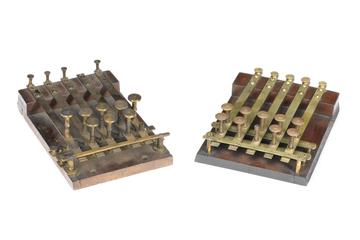
Transmitting keys for Five-needle telegraph, 1837-1846

Transmitting keys for Five-needle telegraph, 1837-1846

1837-1846

A.B.C. telegraph transmitter, 1835-1845

A.B.C. telegraph transmitter, 1835-1845

1835-1845

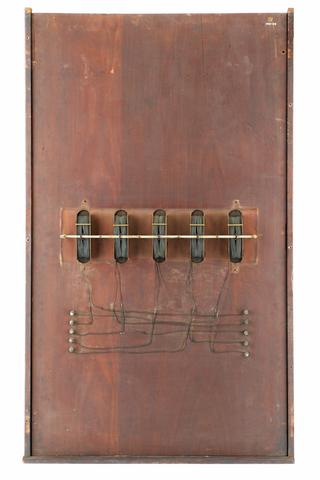
Cooke and Wheatstone five-needle telegraph

Cooke and Wheatstone five-needle telegraph

1837

Cooke and Wheatstone 5-needle telegraph, 1837

Cooke and Wheatstone 5-needle telegraph, 1837

1837

Wheatstone's kaleidophone

Wheatstone's kaleidophone

1850

Wheatstone's Moving Picture Viewer with framed stereo photographs

Wheatstone's Moving Picture Viewer with framed stereo photographs

circa 1870

Wheatstone's artificial voice-box

Wheatstone's artificial voice-box

1835

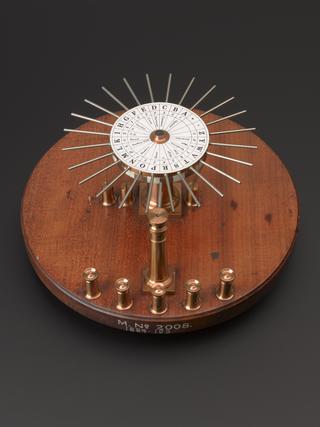
'Cryptograph' circular coding machine

'Cryptograph' circular coding machine

Wheatstone's harmonic diagram

Wheatstone's harmonic diagram

1821

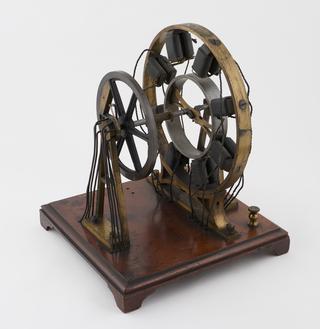
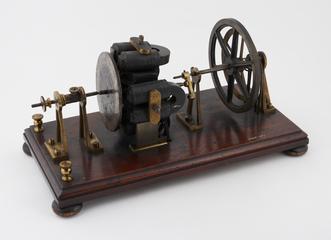
One of Wheatstone's electromagnetic engines, 1841

One of Wheatstone's electromagnetic engines, 1841

1841

Wheatstone No. 1 original rheostat, 1843

Wheatstone No. 1 original rheostat, 1843

1843

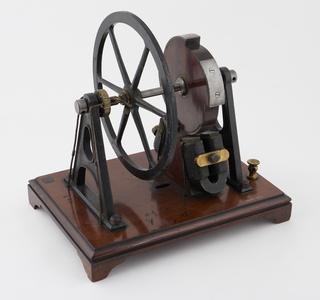
One of Wheatstone's electromagnetic engines, 1841

One of Wheatstone's electromagnetic engines, 1841

1841

One of Wheatstone's electromagnetic engines, 1841

One of Wheatstone's electromagnetic engines, 1841

1841

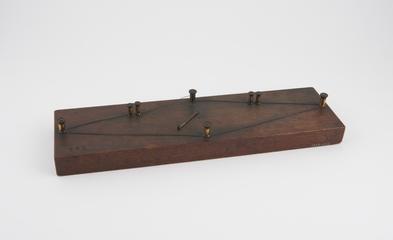
Wheatstone's original bridge

Wheatstone's original bridge

1843

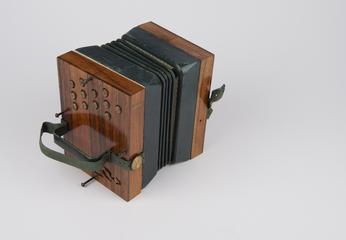
Wheatstone concertina

Wheatstone concertina

1850

Siren giving major common chord.

Siren giving major common chord.

Seven Original Stereograms by Charles Wheatsone, 1845-1855

Seven Original Stereograms by Charles Wheatsone, 1845-1855

1845-1855

Harmonic wave apparatus, mid 19th century

Harmonic wave apparatus, mid 19th century

1831-1870

Wheatstone's Electrical Counter, 1858

Wheatstone's Electrical Counter, 1858

1858

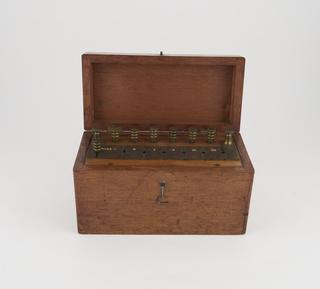
Wheatstone's Resistance Box

Wheatstone's Resistance Box

1850

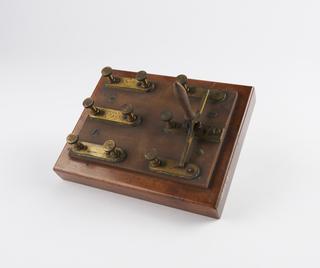
Switch used by Wheatstone

Switch used by Wheatstone

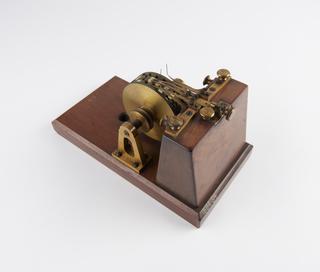
Double tongue commutator used by Wheatstone

Double tongue commutator used by Wheatstone

1861

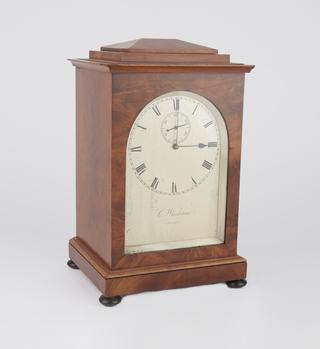
Bracket clock with electrical impulse dial for seconds impulses

Bracket clock with electrical impulse dial for seconds impulses

1890-1945

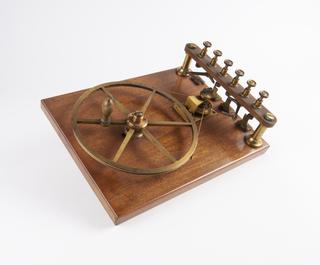
Double wheel commutator

Double wheel commutator

Mouth organ, or symphonium by Sir Charles Wheatstone.

Mouth organ

1829-1884

Wheatstone's original "Magic Lyre" for rendering vibrations audible at a distance, through wires.

Wheatstone's original 'Magic Lyre', 1821

1821

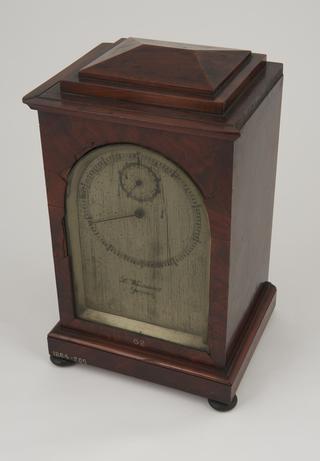
Polar clock (Wheatstone type) by J. Soleil, Paris, in wooden case, c.1850 (B4217).

Polar clock (Wheatstone type) by J. Soleil

1845-1855

Wheatstone's Helio-chronometer, in case, Elliott Brothers, London, England, 1876-1899

Wheatstone's Helio-chronometer, 1876-1899

1876-1899

Two symphoniums invented by Sir Charles Wheatstone, in leather case.

Wheatstone's symphonium, c 1829.

1829

Stereo-kinematographic viewing apparatus, 'Wheatstone's Moving Picture Viewer'. Holding a reel of stereoscopic images of a steam engine (albumen prints).

Wheatstone's Moving Picture Viewer

circa 1870

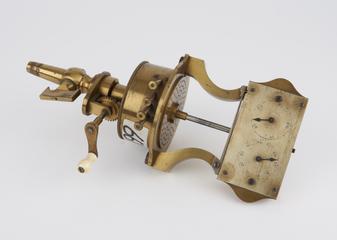
Early electric clock by Wheatstone with base and small part. (Originally part of Inv.No. 1923-278, see ScM.7/636/1)

Early electric clock by Wheatstone with base and small part

Wheatstone's harmonic diagram.

Wheatstone's harmonic diagram

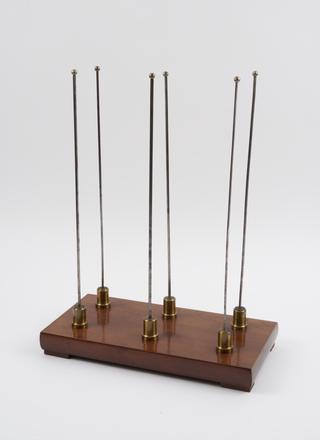
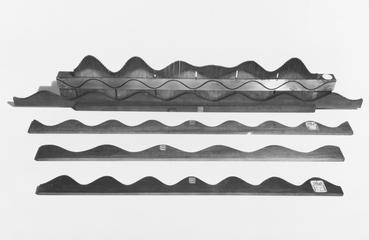
Wave motion model, to illustrate the wave theory of light, invented by Sir C. Wheatstone, made J.Newman, London, c.1842. Complete with altenative wooden wave strips and some spare metal rods. With MS instructions for using the machine on headed notepaper of John Newman, 122 Regents Street, London

Wave motion model, to illustrate the wave theory of light, with alternative parts

1840-1845

Skeleton Wheatstone companion clock on wooden base, complete, 1860-1940

Skeleton companion clock by Wheatstone, 1860-1940

1860-1940

Wheatstone's gas-jet organ (glass tubes said to be not original).

Wheatstone's gas-jet organ (glass tubes said to be not original)

Wheatstone's resistance coils, 1838 (18 coils mounted on a circular board)

Wheatstone's resistance coils

1838

Wheatstone master clock with the following parts: pulley, weight hanger and eleven slotted disc weights and winding handle

Wheatstone master clock with the following parts: pulley

circa 1870

Weight-driven chronoscope with horizontal dial, with Hipp-type tuned reed escapement, 1840-1849. This instrument shows how Wheatstone has made alterations to his design of chronoscope in light of the work of Hipp.

Weight-Driven Chronoscope, 1840-1849

1840-1849

[Letter] 1864 Apr 28, Regents Park [to] Lord Otho Fitz-Gerald/C[harles] Wheatstone, [inviting his lordship to a demonstration of the Automatic Telegraph and other electrical experiments. 1p. Item came with a pamphlet (12p.): Prof. Wheatstone's patents/The Universal Private Telegraph Company, now in main Library stock at RB UNI]

[Letter] 1864 Apr 28

1864