Image
Category
Collection
Maker
On Display
Object type
Place
Material
Date
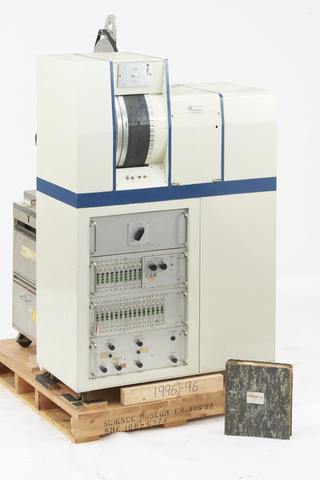
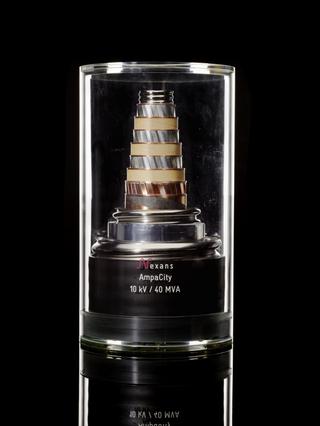
Section of Superconducting cable

Section of Superconducting cable

2013

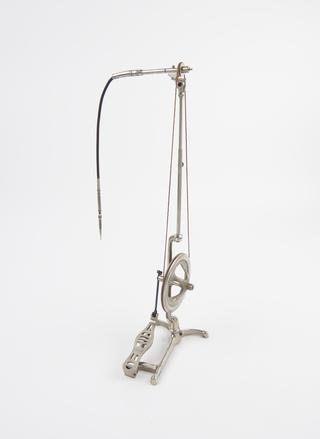
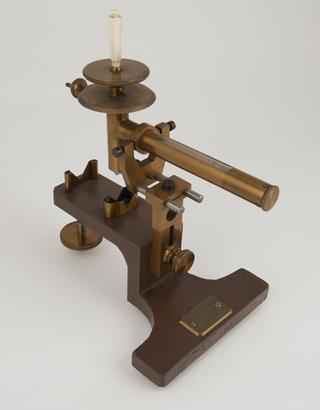
Model of a foot operated drill, Germany, 1910-1920

Model of a foot operated drill, Germany, 1910-1920

1910-1920

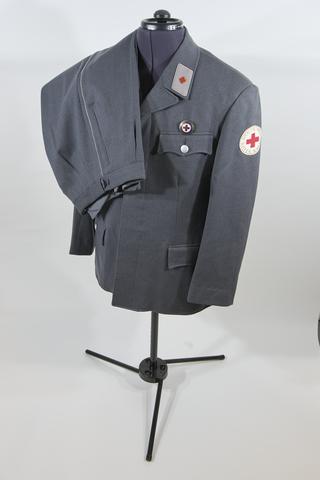
German Red Cross uniform

German Red Cross uniform

Unknown

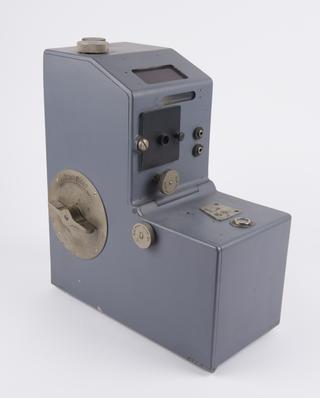
Mintrop field seismograph, recording apparatus and box, for geophysical prospecting

Mintrop field seismograph, recording apparatus and box, for geophysical prospecting

1921

Diagraphe perspectograph, in fitted mahogany case

Diagraphe perspectograph, in fitted mahogany case

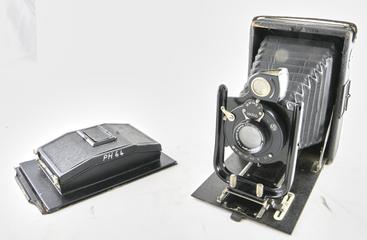
Orion Folding Bellows Hand Camera

Orion Folding Bellows Hand Camera

1920

Analogue Recording Machine by Prakla Seismos

Analogue Recording Machine by Prakla Seismos

1962-1967

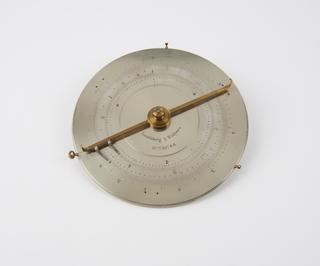
Silvered brass circular slide rule

Silvered brass circular slide rule

1876

A differential screw micrometer reading in metric unit

A differential screw micrometer reading in metric unit

1876

Apparatus for both direct measurement

Apparatus for both direct measurement

1876

Vertical pendulum from Mintrop refraction field seismograph apparatus for geophysical prospecting

Vertical pendulum from Mintrop refraction field seismograph apparatus for geophysical prospecting

1921

Part of a gravimeter built between 1938 and 1957

Part of a gravimeter built between 1938 and 1957

1939

Legs from tripod stand from Mintrop refraction seismograph for geophysical prospecting

Legs from tripod stand from Mintrop refraction seismograph for geophysical prospecting

1921

Upper section of tripod stand for photographic registration apparatus, from Mintrop refraction seismograph for geophysical prospecting

Upper section of tripod stand for photographic registration apparatus, from Mintrop refraction seismograph for geophysical prospecting

1921

Photographic registration apparatus from Mintrop refraction field seismograph for geophysical prospecting

Photographic registration apparatus from Mintrop refraction field seismograph for geophysical prospecting

1921

Part of a gravimeter built between 1938 and 1957

Part of a gravimeter built between 1938 and 1957

1939

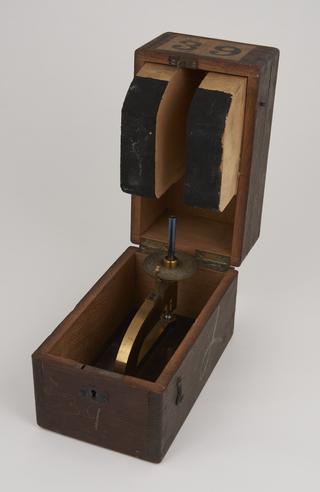
Case for field seismograph vertical pendulum from Mintrop refraction seismograph for geophysical prospecting

Case for field seismograph vertical pendulum from Mintrop refraction seismograph for geophysical prospecting

1921

Box for Mintrop refraction field seismograph with recording apparatus, for geophysical prospecting

Box for Mintrop refraction field seismograph with recording apparatus, for geophysical prospecting

1921

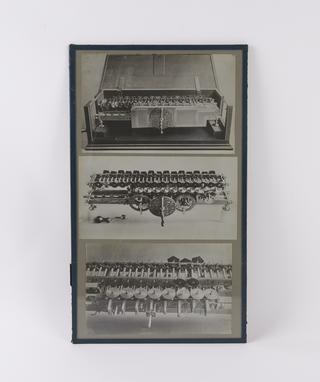
Photographic prints of Leibniz's calculating machine

Photographic prints of Leibniz's calculating machine

1925

Sequence of 16 still photographs of a horse and rider taken by Ottomar Anschutz, c. 1886. In unfolding Constantina album.

Sequence of 16 still photographs of a horse and rider taken by Ottomar Anschutz

1886

Four cartons, opened, with folding lid, containing ten glass ampoules of morphine hydrochloride, unsigned, Germany; supplied by Sanitatsdepot X. A. K., Hannover, Germany, 1914

Carton, containing ten glass ampoules of morphine hydrochloride

Small clear glass ampule with a cylindrical body, bulbous neck base tapering to a sealed, pointed head, and a flat base. The ampule is filled with a colourless liquid. A printed paper label with red text is wrapped around the body, reading: “Sanitätsdepot X. K. Hannover / Coffein.-Natr. salicyl. 0.2 g, keimfrei! / 1915.” The object number is marked in black on the tapered head. Object record notes it was issued by the German Army, 20th Army Corps, Hanover (Sanitätsdepot X. K.), c.1914–1918. The ampule contains a sterile caffeine and sodium salicylate solution (0.2 g), used as a stimulant and analgesic during the First World War.

glass ampoule containing a solution of caffeine and sodium salicylate

1900-1918

Small clear glass ampule with a cylindrical body, bulbous neck base tapering to a sealed, pointed head, and a flat base. The ampule is filled with a colourless liquid. A printed paper label with red text is wrapped around the body, reading: “Sanitätsdepot X. K. Hannover / Coffein.-Natr. salicyl. 0.2 g, keimfrei! / 1915.” The object number is marked in black on the tapered head. Object record notes it was issued by the German Army, 20th Army Corps, Hanover (Sanitätsdepot X. K.), c.1914–1918. The ampule contains a sterile caffeine and sodium salicylate solution (0.2 g), used as a stimulant and analgesic during the First World War.

glass ampoule containing a solution of caffeine and sodium salicylate

1900-1918

Small clear glass ampule with a cylindrical body, bulbous neck base tapering to a sealed, pointed head, and a flat base. The neck is wrapped with a strip of clear plastic tape. The ampule is filled with a colourless liquid. A printed paper label with red text is wrapped around the body, reading: “Sanitätsdepot X. K. Hannover / Coffein.-Natr. salicyl. 0.2 g, keimfrei! / 1915.” The object number is marked in black on the upper body near the neck. Object record notes it was issued by the German Army, 20th Army Corps, Hanover (Sanitätsdepot X. K.), c.1914–1918. The ampule contains a sterile caffeine and sodium salicylate solution (0.2 g), used as a stimulant and analgesic during the First World War.

glass ampoule containing a solution of caffeine and sodium salicylate

1900-1918

Cunz plate camera Model 8. Folding camera for 4 inch x 5 inch plates. F:13.5cm Steinheil Munchen Doppelanastigmat Unofocal. ACG shutter 1/2/5/10/25/50/100/T/B. Rising and cross front. Double extension bellows. Reflecting brilliant finder with spirit level

Clunz Plate Camera No 8

Leather camera case for a Cunz plate camera

Camera case for a Clunz plate camera No 8

Engraving. Express Locomotive for the Midland Railway (4-2-2-No 26). Engraved by E Steinmetz, Hanover. Illustration from magazine.

Express Locomotive for the Midland Railway (4-2-2 No 26)
This Thyssen gravity meter was built in 1939 by Seismos GmbH (later Prakla Seismos), a German company which built scientific instruments. The instrument is stood upright on a adjustable tripod frame. The instrument has two tubed thermometers attached to the inside of the casing, with the spring balance and beam device placed near the top of the casing. Accompanying the meter itself are two wooden boxes, the smaller of which contains tools used for the maintenance of the meter, including: screwdrivers, clamps, tweezers and spare parts. A separate wooden box contains spare springs, which are kept taught in the casing.

Thyssen-type Gravity Meter, 1939

1939

Mintrop refraction field seismograph, recording apparatus and stand for geophysical prospecting, designed by Ludger Mintrop and made by Seismos GmbH, Hannover, Germany, c.1921. This instrument type was the earliest practical field seismograph.

Mintrop refraction field seismograph with recording apparatus, for geophysical prospecting

1921

Small clear glass ampule with a cylindrical body, bulbous neck base tapering to a sealed, pointed head, and a flat base. The ampule is filled with a colourless liquid. A printed paper label with red text is wrapped around the body, reading: 'Sanitätsdepot X. K. Hannover / Coffein.-Natr. salicyl. 0.2 g, keimfrei! / 1915.' The object number is marked in black on the tapered head. Object record notes itt was issued by the German Army, 20th Army Corps, Hanover (Sanitätsdepot X. K.), c.1914–1918. The ampule contains a sterile caffeine and sodium salicylate solution (0.2 g), used as a stimulant and analgesic during the First World War.

glass ampoule containing a solution of caffeine and sodium salicylate

1900-1918

Small clear glass ampule with a cylindrical body, bulbous neck base tapering to a sealed, pointed head, and a flat base. The ampule is filled with a colourless liquid. A printed paper label with red text is wrapped around the body, reading: “Sanitätsdepot X. K. Hannover / Coffein.-Natr. salicyl. 0.2 g, keimfrei! / 1915.” The object number is marked in black on the tapered neck. Object record notes it was issued by the German Army, 20th Army Corps, Hanover (Sanitätsdepot X. K.), c.1914–1918. The ampule contains a sterile caffeine and sodium salicylate solution (0.2 g), used as a stimulant and analgesic during the First World War.

glass ampoule containing a solution of caffeine and sodium salicylate

1900-1918

Small clear glass ampule with a cylindrical body, bulbous neck base tapering to a sealed, pointed head, and a flat base. The ampule is filled with a colourless liquid. A printed paper label with red text is wrapped around the body, reading: “Sanitätsdepot X. K. Hannover / Coffein.-Natr. salicyl. 0.2 g, keimfrei! / 1915.” The object number is marked in black on the body just above the base rim. Object record notes it was issued by the German Army, 20th Army Corps, Hanover (Sanitätsdepot X. K.), c.1914–1918. The ampule contains a sterile caffeine and sodium salicylate solution (0.2 g), used as a stimulant and analgesic during the First World War.

glass ampoule containing a solution of caffeine and sodium salicylate

1900-1918

Three darkslides for a Clunz plate camera No 8.

Three Darkslides for a Clunz Plate Camera No 8

Verichrome film pack for a plate camera

Verichrome film pack cassette for a Clunz plate camera No. 8

Folding camera for 9 x 12cm plates. Fitted with a Busch Tiarnar Anastigmat lens F:15cm f/4.5-36 No.267107. Compur shutter 1/2/5/10/25/50/100/150/B/T. Screw rising and cross front, rack and pinion focusing, double extension. Reflecting viewfinder missing. Ground glass focusing screen with folding hood.

Glunz Model 60/I Plate camera

1920

Cunz plate camera Model 8. Folding camera for 4 inch x 5 inch plates. F:13.5cm Steinheil Munchen Doppelanastigmat Unofocal. ACG shutter 1/2/5/10/25/50/100/T/B. Rising and cross front. Double extension bellows. Reflecting brilliant finder with spirit level

Clunz plate camera No. 8