One of of three platinotype prints of engravings in, 'Selenographia' by Johannes Hevelius, 1647 showing sunspots observed through a telescope. From page 519 and dated 3 May to 16 May 1644. Drawing of sunspots, German, 28 October 1642. 1647
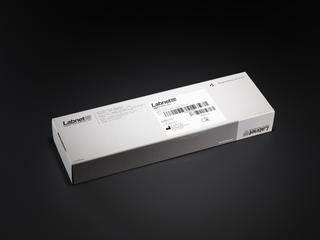
Washing bag, Guppyfriend polyester mesh washing bag and cardboard packaging, designed to catch microplastic fibres from clothing in washing machines, made by Langbrett, bag manufactured in Italy, Portugal and Poland, packaging manufactured in Germany, 2018. The bag was used in a 2020 research study led by Imogen Napper at the University of Plymouth. Guppyfriend washing bag 2018
Stereoscopic microscope, PZO 131, with illuminator, transformer and case, Polish, 1975-1981 Stereoscopic microscope 1975-1981
One of of three platinotype prints of engravings in, 'Selenographia' by Johannes Hevelius, 1647 showing sunspots observed through a telescope. From page 525 and dated 27 August to 8 October 1644. Drawing of sunspots, German, 28 October 1642. 1647
Cup, ceramic, London Midland & Scottish Railway, made by Porzellanfabrik Königszelt, Poland, c1945-1947; white with green vertical lettering. Overall: 68 mm x 104 mm x 77 mm, 0.18 kg. Ceramic cup, London Midland & Scottish Railway 1945-1947
Ten zloty coin with the head of Copernicus, Poland, 1965-1967 Ten zloty coin with the head of Copernicus 1965-1967
One of of three platinotype prints of engravings in, 'Selenographia' by Johannes Hevelius, 1647 showing sunspots observed through a telescope. From page 500 and dated 28 October to 6 November 1642 Drawing of sunspots, German, 28 October 1642. 1647
"Oko" sub-standard cine camera/projector by Proszynski, patented 1912 "Oko" sub-standard Cine Camera/Projector 1912
Teacup, ceramic, London Midland & Scottish Railway, unidentified maker from Boguchwała, Poland; white with green LMS transfer, c1938. Overall: 68 mm x 104 mm 78 mm, 0.18 kg. Ceramic tea cup, London Midland & Scottish Railway circa 1938
Gilt medallion re International Aero-Philately Exhibition Danzig 1932. International Aero-Philately Exhibition, Danzig 1932
'Oko' sub-standard cine camera/projector by Proszynski, patented 1912. Also samples of film and carrying box. 'Oko' sub-standard cine camera/projector by Proszynski 1912
Original carrying box and accessories for "Oko" sub-standard cine camera/projector by Proszynski, patented 1912. Accessories include; spare lamps, lens unit, and voltmeter housed in pocket watch case. Case and accessories for 'Oko' sub-standard cine camera/projector 1912
Framed sample of film from "Oko" sub-standard cine camera/projector by Proszynski, patented 1912. Film Sample from "Oko" sub-standard Cine Camera/Projector 1912