
OKO Multi-Gauge Cinecamera-Projector

OKO Multi-Gauge Cinecamera-Projector OKO Multi-Gauge Cinecamera-Projector OKO Multi-Gauge Cinecamera-Projector OKO Multi-Gauge Cinecamera-Projector OKO Multi-Gauge Cinecamera-Projector OKO Multi-Gauge Cinecamera-Projector OKO Multi-Gauge Cinecamera-Projector OKO Multi-Gauge Cinecamera-Projector

Creative Commons LicenseThis image is released under a CC BY-NC-SA 4.0 Licence

License this image for commercial use at Science and Society Picture Library

License

Creative Commons LicenseThis image is released under a CC BY-NC-SA 4.0 Licence

License this image for commercial use at Science and Society Picture Library

License

Creative Commons LicenseThis image is released under a CC BY-NC-SA 4.0 Licence

License this image for commercial use at Science and Society Picture Library

License

Creative Commons LicenseThis image is released under a CC BY-NC-SA 4.0 Licence

License this image for commercial use at Science and Society Picture Library

License

Creative Commons LicenseThis image is released under a CC BY-NC-SA 4.0 Licence

License this image for commercial use at Science and Society Picture Library

License

Creative Commons LicenseThis image is released under a CC BY-NC-SA 4.0 Licence

License this image for commercial use at Science and Society Picture Library

License

License this image for commercial use at Science and Society Picture Library

License

License this image for commercial use at Science and Society Picture Library

License

Science Museum Group
© The Board of Trustees of the Science Museum

Science Museum Group
© The Board of Trustees of the Science Museum

Science Museum Group
© The Board of Trustees of the Science Museum

Science Museum Group
© The Board of Trustees of the Science Museum

Science Museum Group
© The Board of Trustees of the Science Museum

Science Museum Group
© The Board of Trustees of the Science Museum

The Kodak Collection at the National Media Museum, Bradford
Science Museum Group Collection

The Kodak Collection at the National Media Museum, Bradford
Science Museum Group Collection

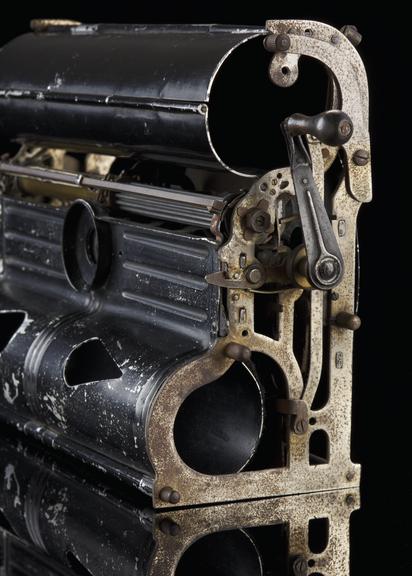
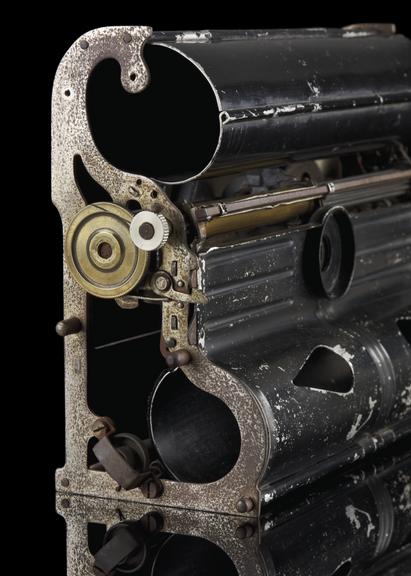
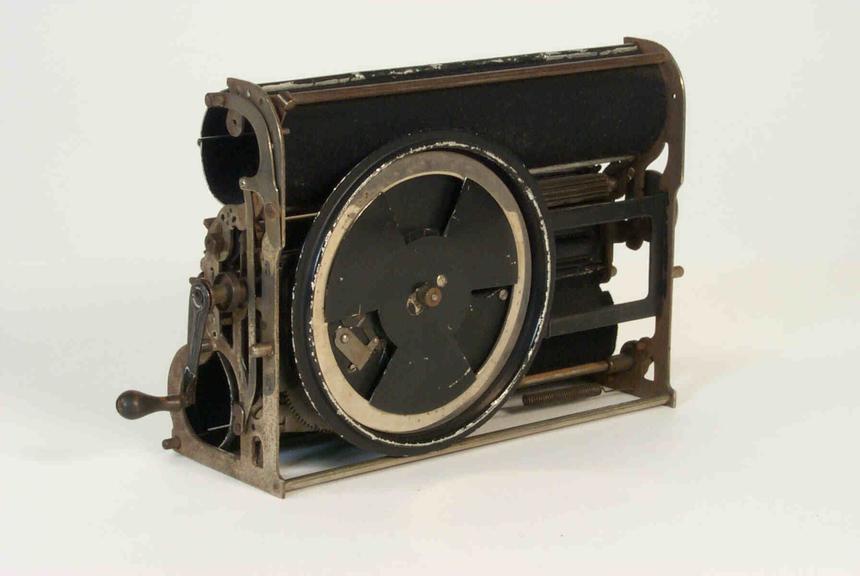
OKO cine camera/projector. Designed by Kasimir Proszynski. Mechanism for 12cm wide specially perforated film; moved laterally to expose 12 frames side by side, then moved down one frame and exposed on the return, and so on. Three-blade shutter; lens missing. Fitted inside light-tight case (missing) for filming. With short length of deteriorating nitrate film; 120mm roll of film with multiple images, 12 frames across.

The OKO camera projector was invented by Kasimir Proszynski in 1912 and first demonstrated in 1914. His unusual design used a strip of film 12cm wide which was perforated on both edges. The camera exposed horizontal rows of 15 pictures 7 x 5mm in size, across the film, which then moved on a step, taking a futher row of pictures back in the other direction. For projection, the same mechansim with the addition of a special electric lamp was used. OKO is Polish for eye.

Details

Category:
Cinematography
Collection:
Kodak Collection
Object Number:
1990-5036/7229
Materials:
celluloid (cellulose), white metal (unknown), wood (unidentified), brass (copper, zinc alloy) and felt
Measurements:
overall: 180 mm x 300 mm x 95 mm,
type:
cine camera/projector
credit:
The Kodak Collection at the National Media Museum, Bradford

Parts

OKO cinecamera-projector. Designed by Kasimir Proszynski. Mechanism for 12cm wide specially perforated film; moved laterally to expose 12 frames side by side, then moved down one frame and exposed on the return, and so on. Three-blade shutter; lens missing. Fitted inside light-tight case (missing) for filming.

OKO Multi-Gauge Cinecamera-Projector

OKO cinecamera-projector. Designed by Kasimir Proszynski. Mechanism for 12cm wide specially perforated film; moved laterally to expose 12 frames side by side, then moved down one frame and exposed on the return, and so on. Three-blade shutter; lens missing. Fitted inside light-tight case (missing) for filming.

More

The OKO camera projector was invented by Kasimir Proszynski in 1912 and first demonstrated in 1914. His unusual design used a strip of film 12cm wide which was perforated on both edges. The camera exposed horizontal rows of 15 pictures 7 x 5mm in size, across the film, which then moved on a step, taking a futher row of pictures back in the other direction. For projection, the same mechansim with the addition of a special electric lamp was used. OKO is Polish for eye.

Measurements:
overall: 180 mm x 300 mm x 95 mm,
Materials:
white metal (unknown) , wood (unidentified) , brass (copper, zinc alloy) and felt
Object Number:
1990-5036/7229/1
type:
cine camera
Short length of deteriorating nitrate film for OKO cine camera-projector; 120mm roll of film with multiple images, 12 frames across.

film for OKO Multi-Gauge Cinecamera-Projector

Short length of deteriorating nitrate film for OKO cine camera-projector; 120mm roll of film with multiple images, 12 frames across.

Materials:
cellulose nitrate
Object Number:
1990-5036/7229/2
type:
cine film