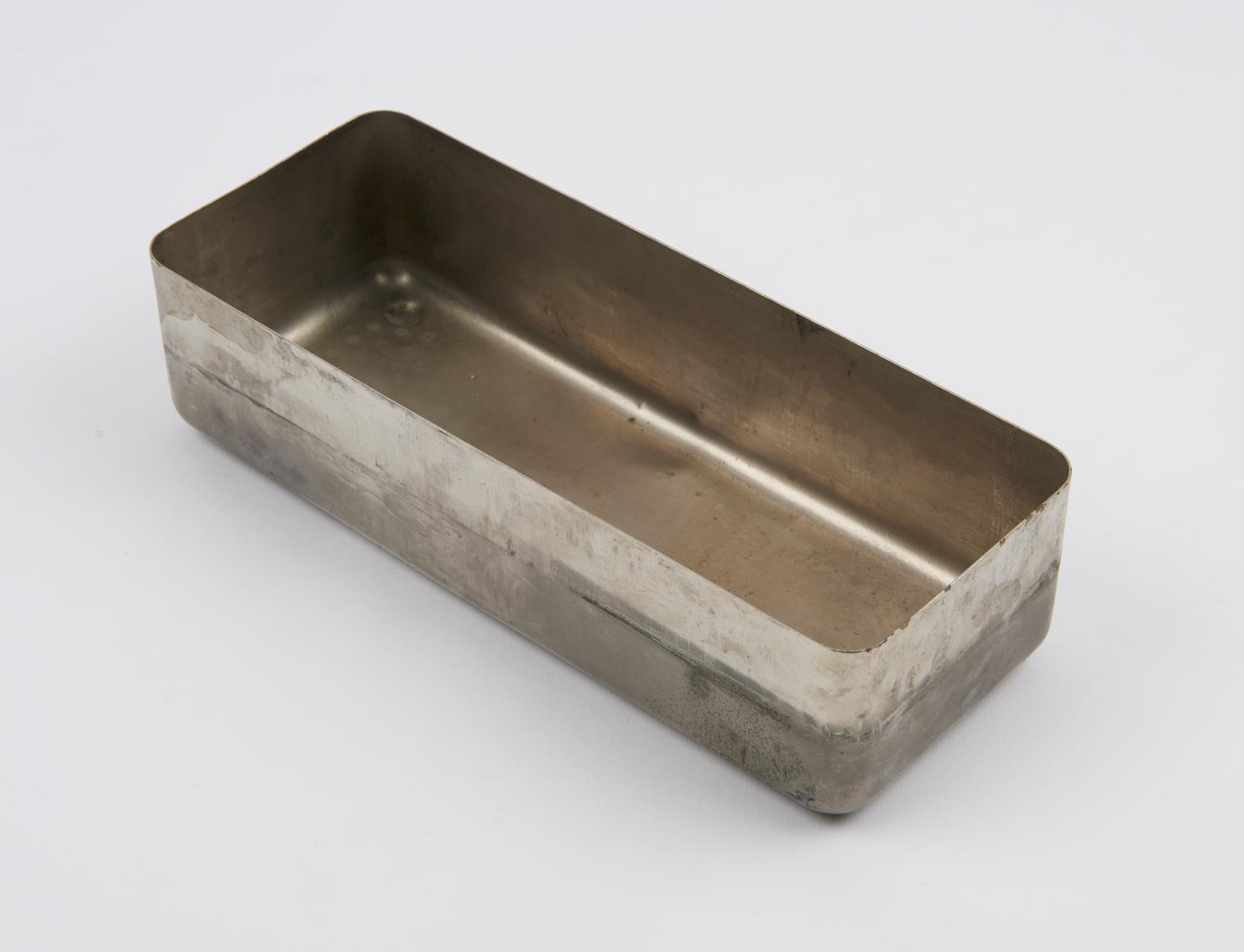
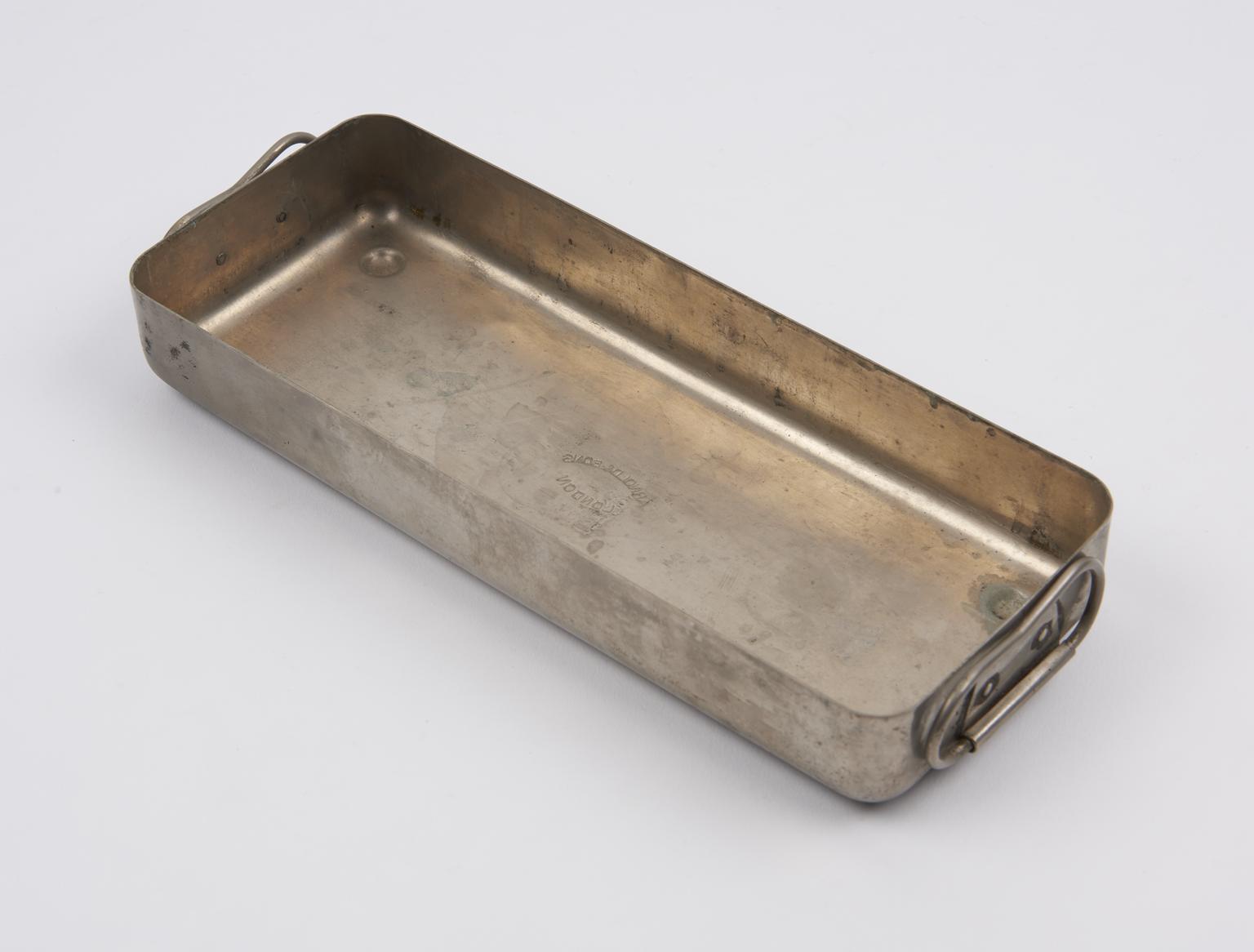
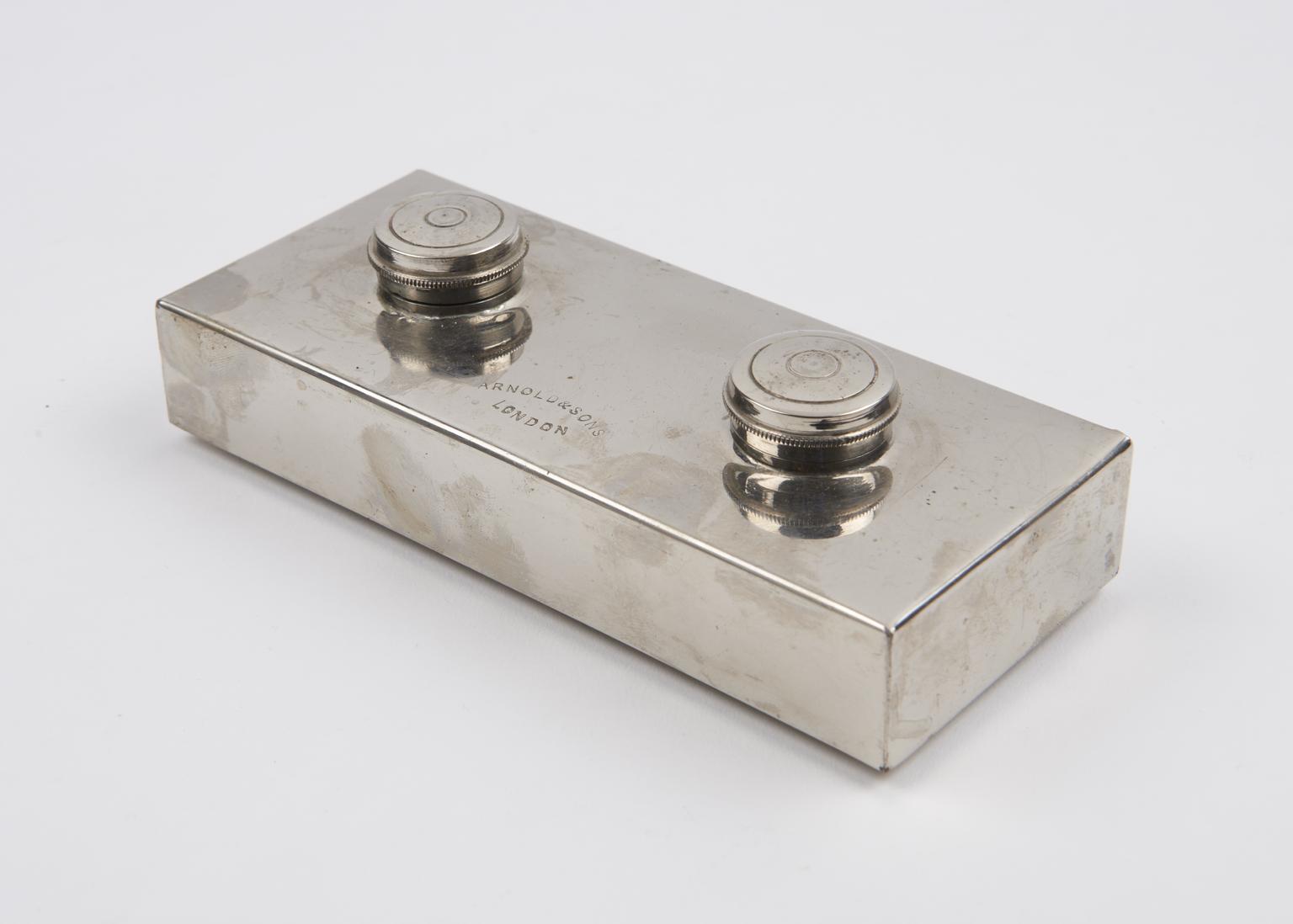
Square iron canister of Tincture of Chloroform and Morphine (B.P. 1885), with contents remaining. 157 mm x 60 mm, 240g. Unknown maker, probably Maw or Arnolds, American, 1915-1916.
Iron canister of Morphine and Chloroform Tincture
Square iron canister of Tincture of Chloroform and Morphine (B.P. 1885), with contents remaining. 157 mm x 60 mm, 240g. Unknown maker, probably Maw or Arnolds, American, 1915-1916.
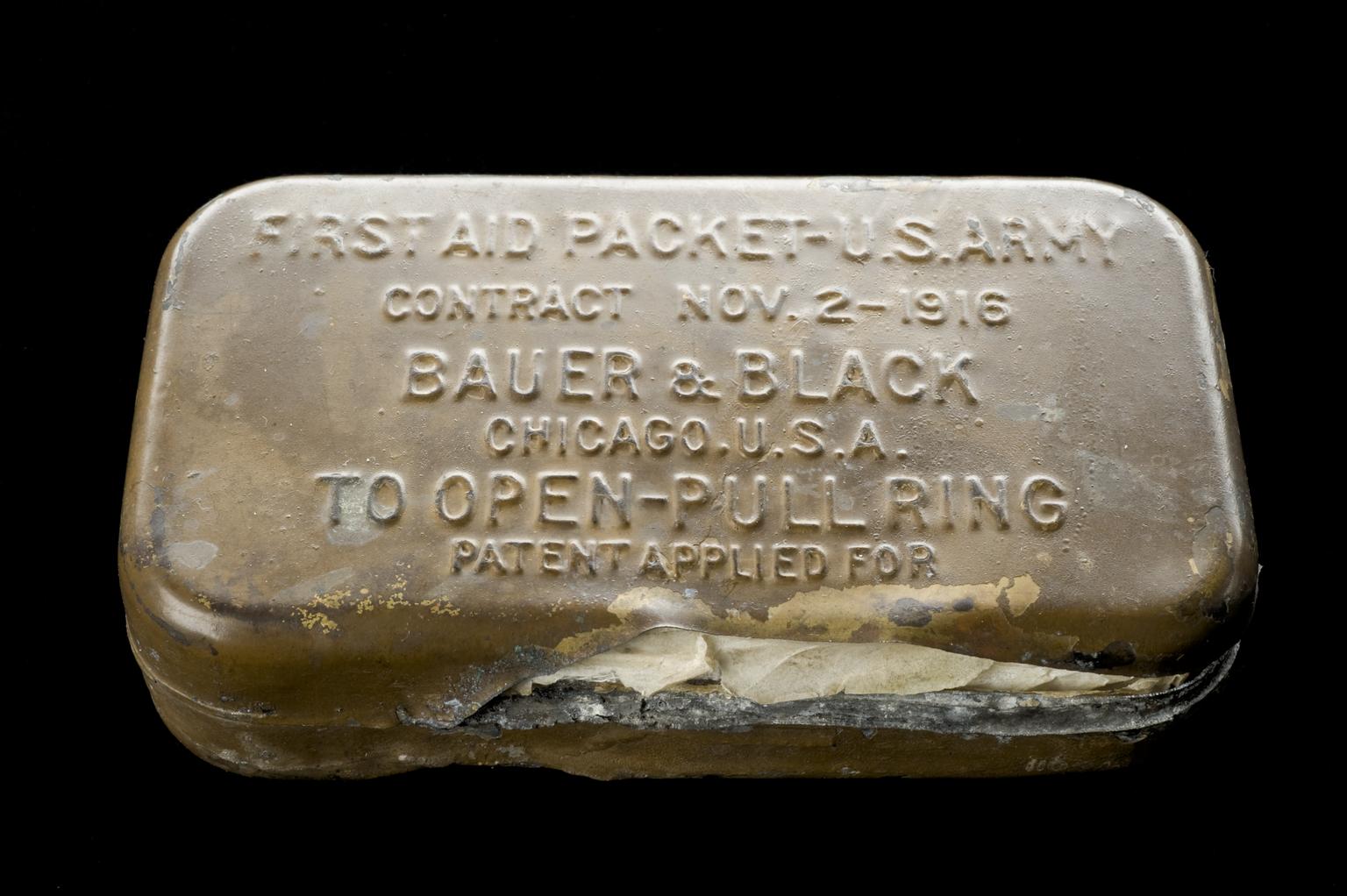
First field dressing, in pull-ring packet, by Bauer and Black of Chicago, for U.S. Army, gauze in tin, 1916
More
Soldiers of nearly all the nations involved in the First World War would be expected to carry a so-called First Field Dressing or an equivalent. This was a basic emergency first aid kit consisting of a length of gauze, a small bandage pad, a safety pin and an ampoule of iodine (later replaced by a mild antiseptic). The kit was carried in a waterproof cover. This example is in a tin can which was opened with a ring pull and is of the type used by the United States Army during the First World War.
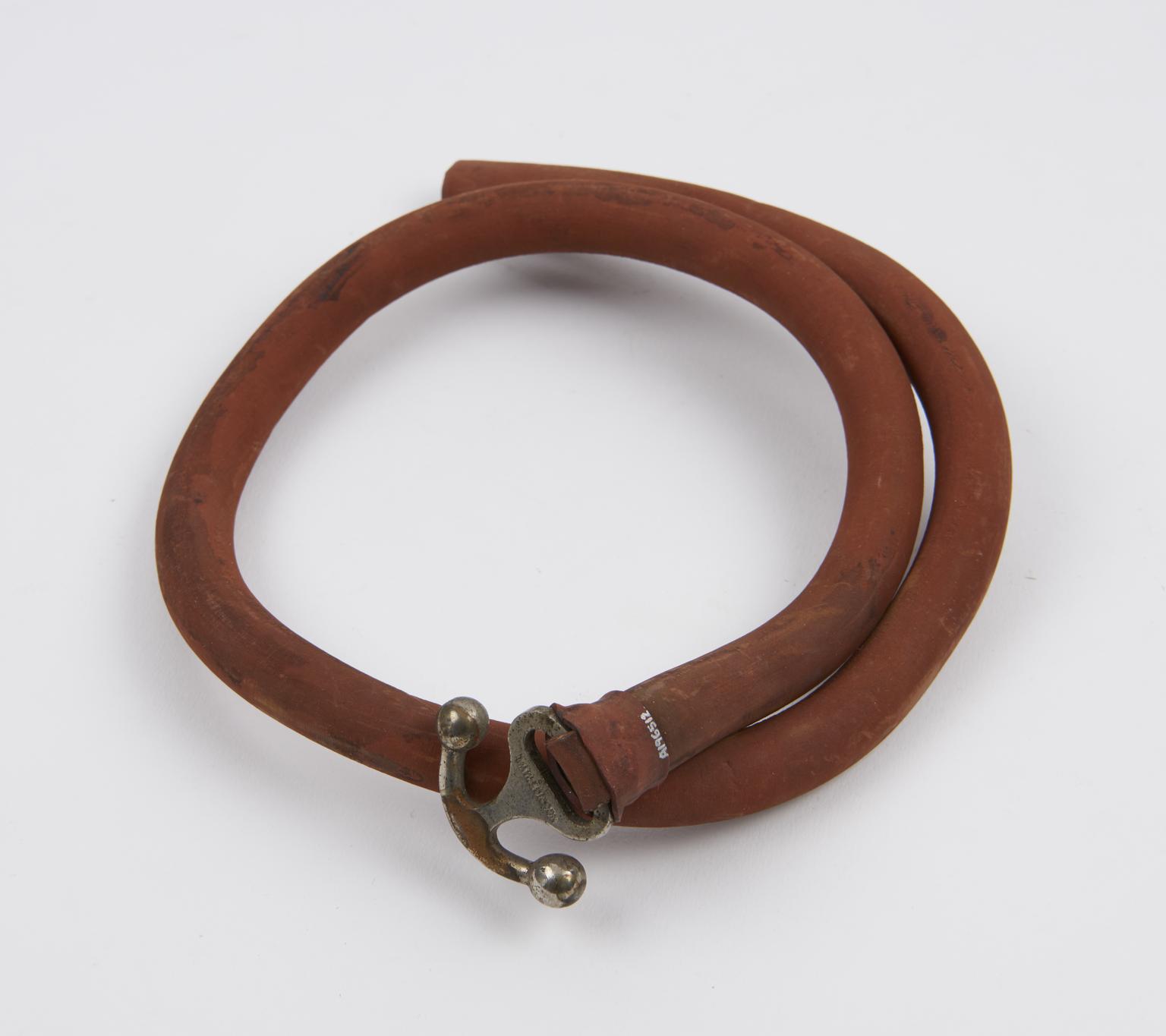
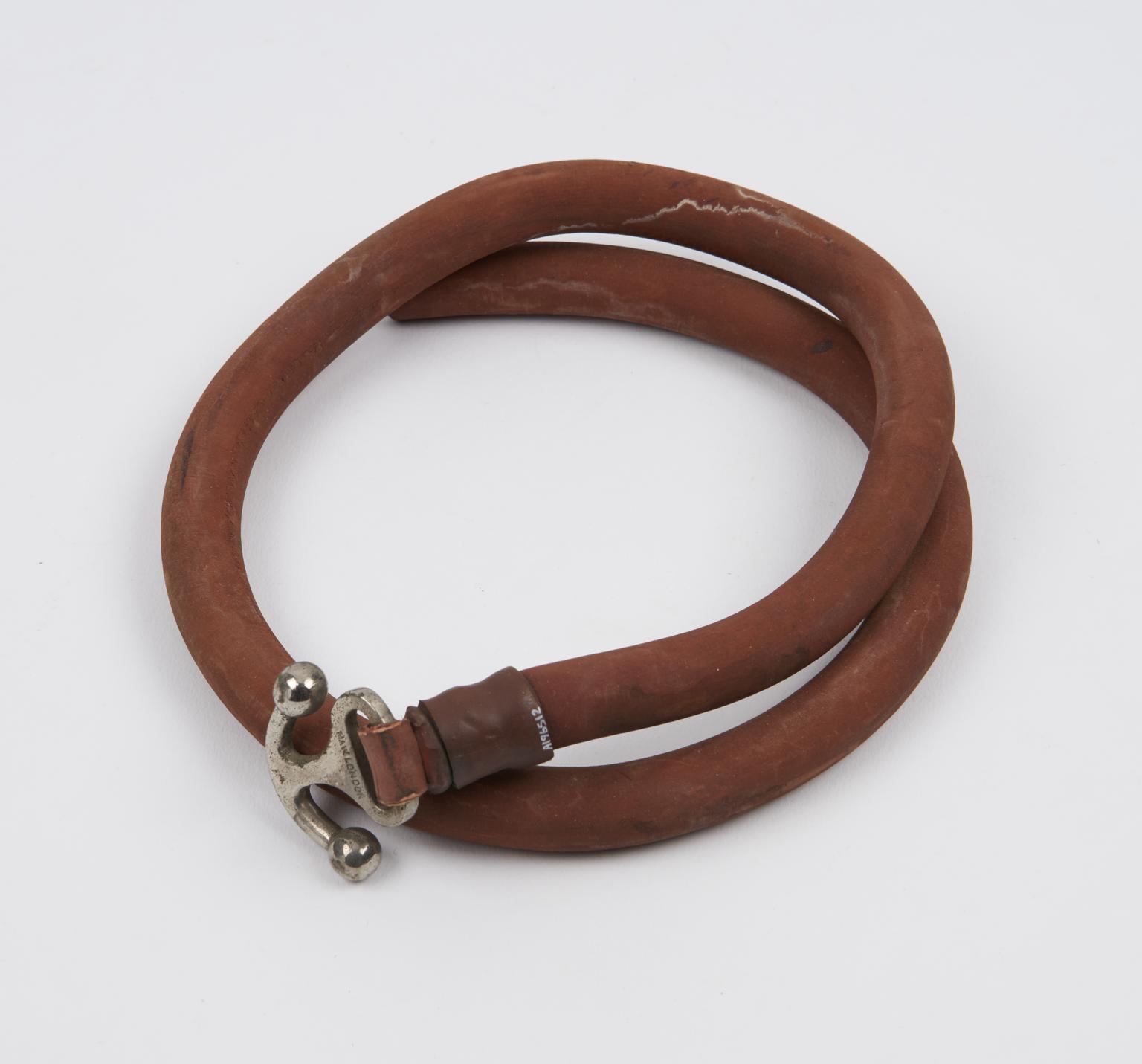
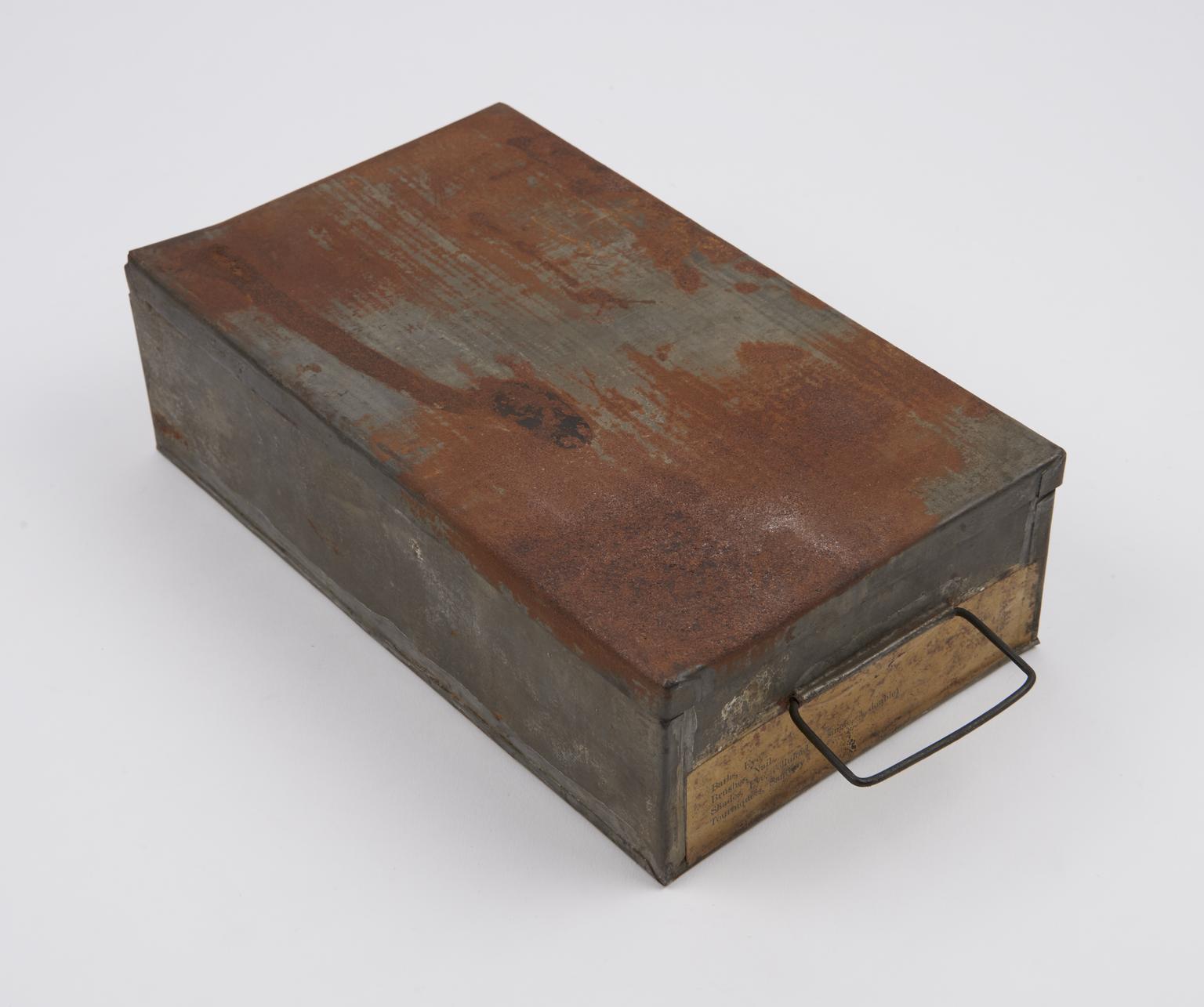
Two Samways rubber tourniquets in case, by Maw, the case originally had more extensive contents, c.1916
2 Samway's tourniquets in case
Two Samways rubber tourniquets in case, by Maw, the case originally had more extensive contents, c.1916
More
Applying a tourniquet to a wounded arm or leg to control bleeding is a key aspect of emergency treatment. But despite centuries of battlefield use, their use during the First World War was fiercely contested. After the initial application, long delays before there was further medical attention, including the removal of the tourniquet, could starve damaged limbs of blood, leading to unnecessary amputations and even death.
The Samways tourniquet conists of a length of rubber tubing, which is stretched around the bleeding limb and held in place via a metal 'clip'.




 This image is released under a