Image
Category
Object type
Material
Maker
Place
Date
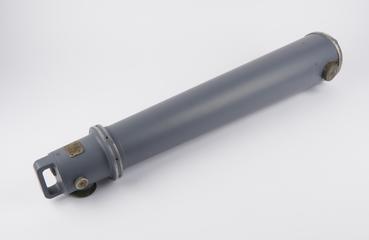
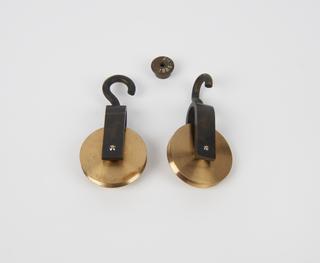
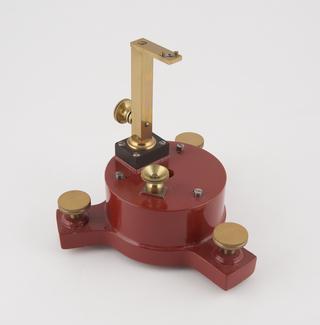
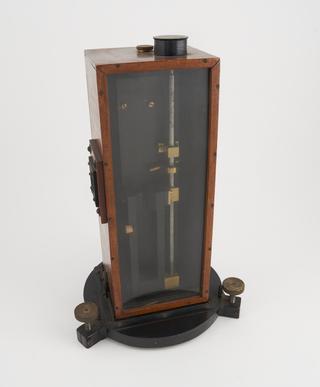
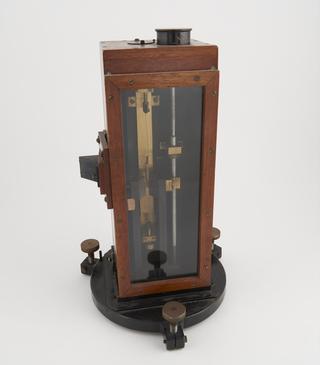
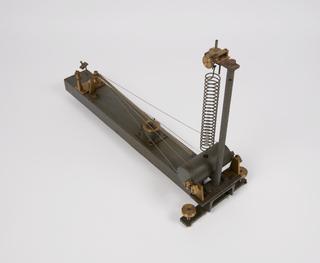
Gray-Milne seismograph made by James White

Gray-Milne seismograph made by James White

1885

Mintrop field seismograph, recording apparatus and box, for geophysical prospecting

Mintrop field seismograph, recording apparatus and box, for geophysical prospecting

1921

Double-Boom Seismograph designed by John Milne, 1908

Double-Boom Seismograph designed by John Milne, 1908

1908

Portable refraction seismograph by Geospace

Portable refraction seismograph by Geospace

1960

Strong motion seismograph

Strong motion seismograph

1971-1980

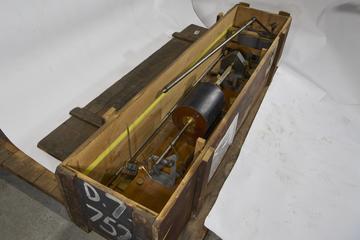
Clockwork mechanism for Shaw type seismograph, British, 1930-1935

Clockwork mechanism for Shaw type seismograph, British, 1930-1935

1930-1935

Clockwork mechanism for Shaw type seismograph, British, 1930-1935

Clockwork mechanism for Shaw type seismograph, British, 1930-1935

1930-1935

Clockwork mechanism for Shaw type seismograph, British, 1930-1935

Clockwork mechanism for Shaw type seismograph, British, 1930-1935

1930-1935

Clockwork mechanism for Shaw type seismograph, British, 1930-1935

Clockwork mechanism for Shaw type seismograph, British, 1930-1935

1930-1935

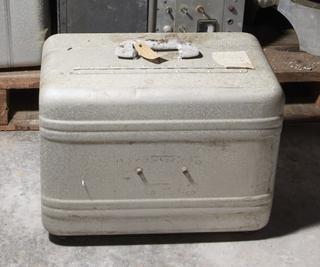
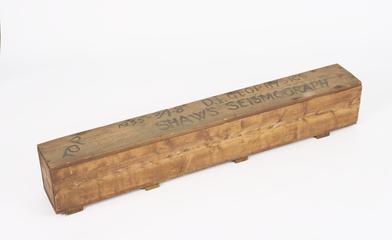
Box for Shaw type seismograph, British, 1930-1935

Box for Shaw type seismograph, British, 1930-1935

1930-1935

Milne lamp-post seismograph, 1902

Milne lamp-post seismograph, 1902

1902

Milne-Shaw seismograph no. 33, c. 1925

Milne-Shaw seismograph no. 33, c. 1925

circa 1925

Boom for Milne horizontal pendulum seismograph

Boom for Milne horizontal pendulum seismograph

1899

Component of Milne-Shaw seismograph

Component of Milne-Shaw seismograph

Component of Milne-Shaw seismograph

Component of Milne-Shaw seismograph

Vertical pendulum from Mintrop refraction field seismograph apparatus for geophysical prospecting

Vertical pendulum from Mintrop refraction field seismograph apparatus for geophysical prospecting

1921

Spare for Galitzin three-component galvanometric seismograph

Spare for Galitzin three-component galvanometric seismograph

1910

Spare for Galitzin three-component galvanometric seismograph

Spare for Galitzin three-component galvanometric seismograph

1910

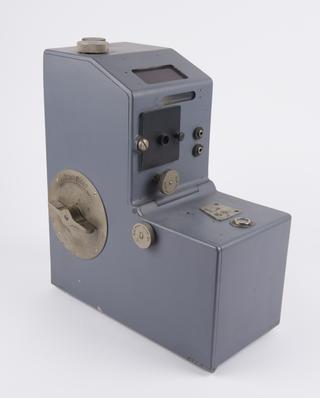
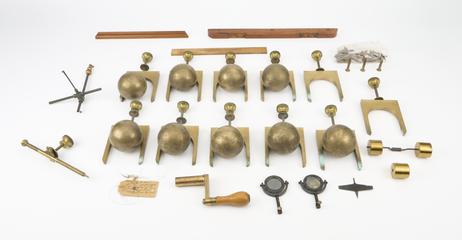
Carton of parts for Gray-Milne seismograph

Carton of parts for Gray-Milne seismograph

1885

Main part of Ewing three-component seismograph, 1880

Main part of Ewing three-component seismograph, 1880

1880

Two Wood-Anderson short-period seismograph,1933

Two Wood-Anderson short-period seismograph,1933

Short-period vertical seismometer used at Kew Observatory

Short-period vertical seismometer used at Kew Observatory

1939

Two Wood-Anderson short-period seismograph,1936

Two Wood-Anderson short-period seismograph,1936

Recorder for Milne horizontal pendulum seismograph

Recorder for Milne horizontal pendulum seismograph

1899

Spare for Galitzin three-component galvanometric seismograph

Spare for Galitzin three-component galvanometric seismograph

1910

Dr J H Jones type Microid Seismograph by Griffin and Tatlock, 1928

Dr J H Jones type Microid Seismograph by Griffin and Tatlock, 1928

1928

Milne-Shaw seismograph no. 33, made by John Johnson Shaw, West Bromwich, UK, and owned by the Safety in Mines Research Board, c. 1925

Milne-Shaw seismograph no. 33, c. 1925

circa 1925

Inverted pendulum seismograph designed by Emil Wiechert, made by Spindler & Hoyer in Gottingen, Germany, and installed at Eskdalemuir Observatory, Dumfriesshire, Scotland in 1909.

Wiechert inverted pendulum seismograph, c. 1909

1909

Ewing three-component seismograph, 1880

Ewing three-component seismograph, 1880

1880

Two Wood-Anderson short-period seismographs, 1933 and 1936

Two Wood-Anderson short-period seismographs, 1933 and 1936

1933-1936

Mainka horizontal seismograph, 1912

Mainka horizontal seismograph, 1912

1912

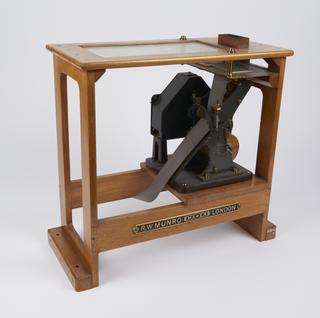
Single boom horizontal pendulum seismograph no.9, designed by John Milne and made by R. W. Munro, 105-149 Cornwall Rd, South Tottenham, London, 1898. This instrument was installed at Kew Observatory and was one of the first such devices in the worldwide network of seismographs established from 1897 by Milne and the British Association for the Advancement of Science (BAAS).

Horizontal pendulum seismograph designed by John Milne and operated at Kew Observatory

1898

Milne-Shaw seismograph, no.45, possibly 1930, see technical file

Milne-Shaw seismograph

Ewing duplex pendulum seismograph by Cambridge Scientific Instrument Co., 1886

Ewing duplex pendulum seismograph by Cambridge Scientific Instrument Co.

1886

Part of sensor mechanism for Shaw horizontal pendulum seismograph, 1930-1935

Clockwork mechanism for Shaw type seismograph, British, 1930-1935

1930-1935

Brass roller for Shaw horizontal pendulum seismograph, 1930-1935

Clockwork mechanism for Shaw type seismograph, British, 1930-1935

1930-1935

Ten weights and hanger for Shaw horizontal pendulum seismograph, 1930-1935

Clockwork mechanism for Shaw type seismograph, British, 1930-1935

1930-1935

Agamemnone seismograph, 1907

Agamemnone seismograph, 1907

1907

Milne-Shaw seismograph, 1937-1938

Milne-Shaw seismograph

1937-1938

Two cards:- Specifications of the Mintrop Seismograph and Recording Instrument.

Two cards:- Specifications of the Mintrop Seismograph and Recording Instrument

Short-period vertical seismometer (SPV) with viscous coupling used at Kew Observatory, by F J Scrase and A W Lee, 1939. This instrument was designed to record the vertical component of short-period waves from minor local earthquakes in the UK, complementing Kew’s two Wood-Anderson instruments (see 1974-539) that recorded the horizontal components. The instrument had a free period of 1.5 seconds, was direct recording with optical registration, had a static magnification of 3000 and a damping constant of close to 1.

Short-period vertical seismometer used at Kew Observatory

1939

Milne lamp-post seismograph, 1902. Recording drums and other parts here.

Milne lamp-post seismograph

1902

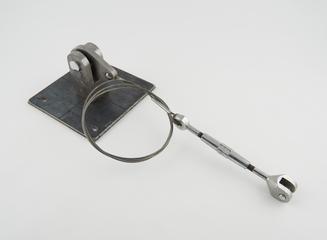
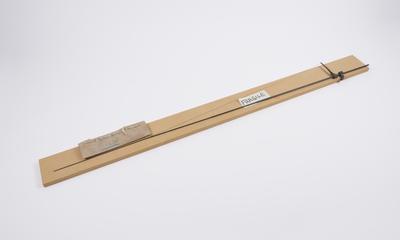
Pivot piece bracket and small double bracket for Shaw horizontal pendulum seismograph, 1930-1935

Clockwork mechanism for Shaw type seismograph, British, 1930-1935

1930-1935

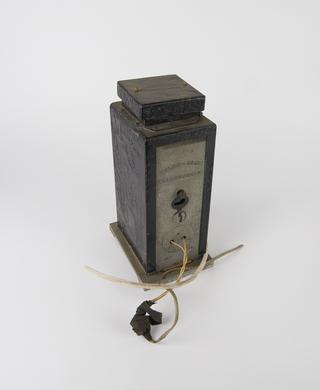
Part of Shaw horizontal pendulum seismograph. Including small box, cardboard box of small parts, wooden base and clockwork part, 1930-1935

Part of Shaw type seismograph, British, 1930-1935

1930-1935

Solenoid on stand with recording arm and pen with ink well, for Shaw horizontal pendulum seismograph, 1930-1935

Clockwork mechanism for Shaw type seismograph, British, 1930-1935

1930-1935

Mahogany shelf for Shaw horizontal pendulum seismograph, 1930-1935

Clockwork mechanism for Shaw type seismograph, British, 1930-1935

1930-1935

Recording drum for Shaw horizontal pendulum seismograph, 1930-1935

Part of Shaw type seismograph, British, 1930-1935

1930-1935

Mainka horizontal seismograph

Mainka horizontal seismograph

Main structure of the seismograph, marked no. 2, designed by Omori Fusakichi for the Earthquake Investigation Committee, Tokyo, Japan, 1898. Consisting of the vertical stand, two wires, rotating drum, and horizontal suspension frame. The seismograph combines a horizontal pendulum mechanism with an auxiliary inverted pendulum, and employs a smoked-paper recording system. The instrument was constructed in Japan, and in 1910 displayed at the Japan-British Exhibition, White City, London. Afterwards it was transferred to Eskdalemuir Observatory, Dumfriesshire, Scotland and operated intermittently until 1925, when the observatory’s seismological programme, administered by the Meteorological Office, was transferred to Kew.

Main structure of Omori seismograph no.2, 1898

1898

Two adjustable wire hooks, recording arm and fork which would be attached to the base plate, a metal a- frame, a conical steel socket fixed to a stand, a bent metal bar that attaches to the recording arm, a straight pole with a spherical section, smoke glazed paper, a square block of lead with a threaded adjustable bar, and a small card box of spares from Seismograph, marked no. 2, designed by Omori Fusakichi for the Earthquake Investigation Committee, Tokyo, Japan, 1898. It combines a horizontal pendulum mechanism with an auxiliary inverted pendulum, and employs a smoked-paper recording system. The instrument was constructed in Japan, and in 1910 displayed at the Japan-British Exhibition, White City, London. Afterwards it was transferred to Eskdalemuir Observatory, Dumfriesshire, Scotland and operated intermittently until 1925, when the observatory’s seismological programme, administered by the Meteorological Office, was transferred to Kew.

Omori seismograph no.2, 1898

1898