Image
Category
Collection
On Display
Object type
Material
Maker
Place
Date
Ivory memento mori

Ivory memento mori

1601-1900

Ivory model of a human skull with moving parts

Ivory model of a human skull with moving parts

undated

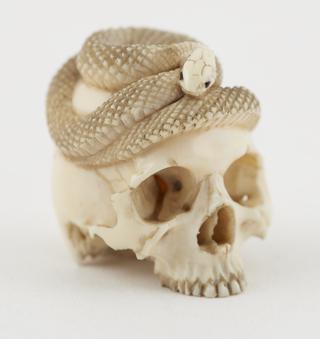
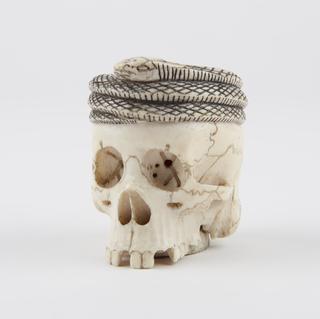
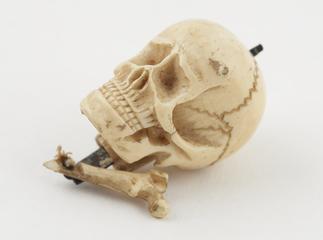
Ivory skull, surmounted by toads and snake

Ivory skull, surmounted by toads and snake

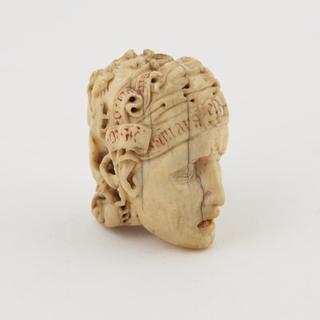
Ivory model of back-to-back skull and head

Ivory model of back-to-back skull and head

Before 1932

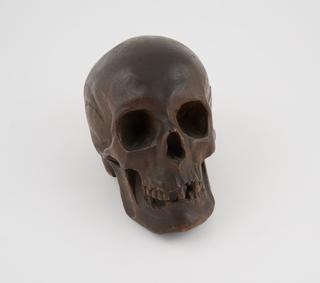
Wooden model of a human skull

Wooden model of a human skull

Ivory model of a skull on wooden pedestal

Ivory model of a skull on wooden pedestal

before 1928

Ivory model of a skull and snake, Europe, undated

Ivory model of a skull and snake, Europe, undated

undated

Plaster copy of the skull of Johann Sebastian Bach (1685-1750)

Plaster copy of the skull of Johann Sebastian Bach (1685-1750)

1900-1927

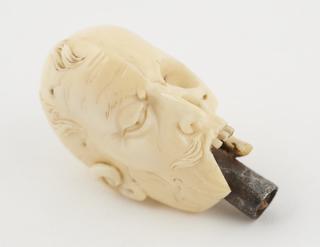
Ivory model of a half head, half skull, Europe, undated

Ivory model of a half head, half skull, Europe, undated

undated

Ivory model of half a human head, half a skull

Ivory model of half a human head, half a skull

undated

Model of an adult skull showing overdevelopment of the lower jaw

Model of an adult skull showing overdevelopment of the lower jaw

1950-1970

Chimpanzee(?) skull, possibly for phrenological use

Chimpanzee(?) skull, possibly for phrenological use

Miniature ivory skull in a silver case, Europe, 1840-1920

Miniature ivory skull in a silver case, Europe, 1840-1920

1840-1920

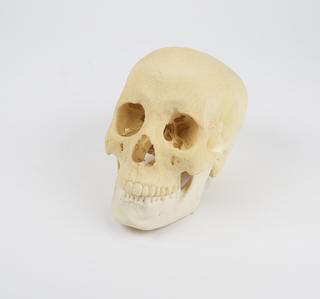
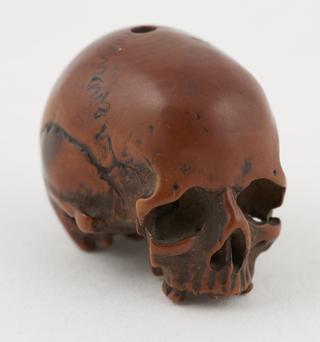
Ivory model of a human skull

Ivory model of a human skull

1701-1900

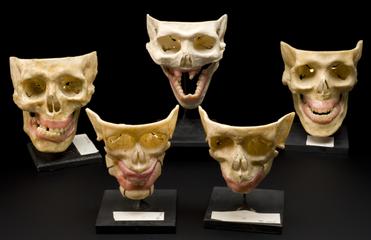
Dentist's models of child's skull needing bone grafts

Dentist's models of child's skull needing bone grafts

1954

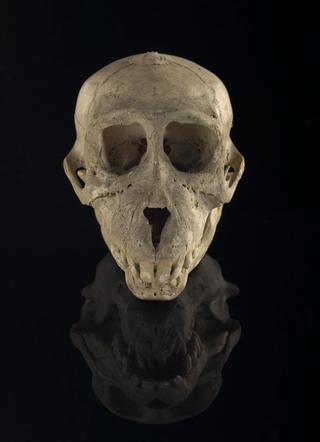
Monkey skull

Monkey skull

Model of an adult skull illustrating overdevelopment of the jaw

Model of an adult skull illustrating overdevelopment of the jaw

1950-1970

Model of adult skull, illustrating dental abnormalities

Model of adult skull, illustrating dental abnormalities

1962

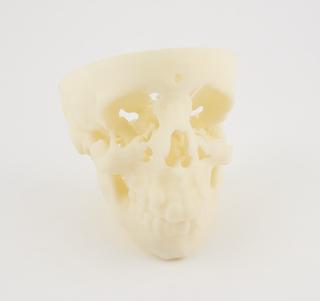
3-D model of a skull with treatment for the genetic disease Treacher Collins syndrome

3-D model of a skull with treatment for the genetic disease Treacher Collins syndrome

1999

Amulet, consisting of bird's skull and beak

Amulet, consisting of bird's skull and beak

1890-1930

Plaster cast of neolithic trephined skull with three holes

Plaster cast of neolithic trephined skull with three holes

1851-1920

3D printed skull

3D printed skull

2013

Wooden model of a human skull, without mandible

Wooden model of a human skull, without mandible

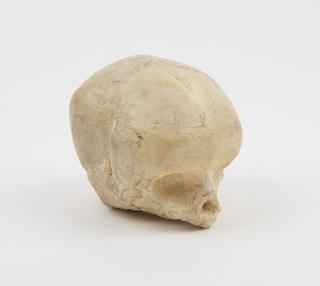
Plaster copy of infant’s skull, England, c. 1900-1921

Plaster copy of infant’s skull, England, c. 1900-1921

1900-1921

3-D model of a skull of a female patient with the genetic disease Treacher Collins syndrome, London, England, 1999

3-D model of a skull of a female patient with the genetic disease Treacher Collins syndrome, London, England, 1999

1999

Plaster cast of the inside of the skull

Plaster cast of the inside of the skull

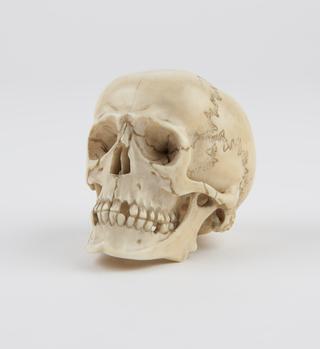
Ivory model of a skull

Ivory model of a skull

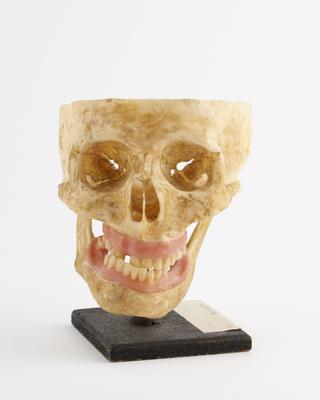
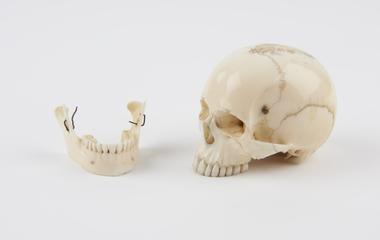
Ivory model skull, with teeth and mandible present

Ivory model skull, with teeth and mandible present

Wooden model of a human skull, without mandible

Wooden model of a human skull, without mandible

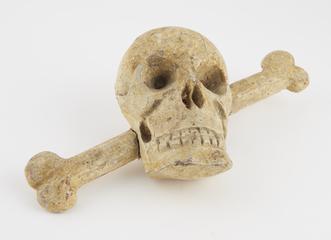
Model skull and crossbones pharmacy decoration

Model skull and crossbones pharmacy decoration

1701-1800

Wooden representation of human skull

Wooden representation of human skull

1601-1900

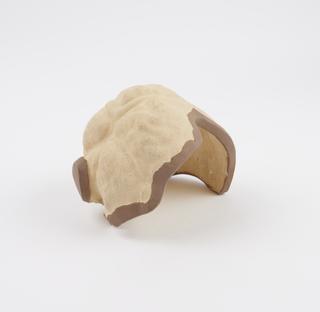
Crude deathshead skull of yellow glazed earthenware

Crude deathshead skull of yellow glazed earthenware

1701-1900

Plaster endocast of cranium showing major blood vessels

Plaster endocast of cranium showing major blood vessels

1851-1930

Wooden model of a human skull

Wooden model of a human skull

Plaster cast of trephined skull

Plaster cast of trephined skull

1851-1920

Ivory model of a skull finely carved with teeth and mandible

Ivory model of a skull finely carved with teeth and mandible

Excavated bronze age skull showing 4 healed trephinings, from Jericho, 2200-2000BC

Bronze Age skull from Jericho, Palestine

2200-2000 BCE

Human skull, marked with phrenological divisions, from the British Phrenological Society.

Human skull, marked with phrenological divisions, United Kingdom, 1821-1899

1821-1899

Distended human skull, labelled LN Fowler, for phrenological use, from the British Phrenological Society.

Distended human skull for phrenological use

before 1937

Sectioned skull, by Tramond, French, 1870-1900

Prepared anatomical skull

1870-1900

Human skull, marked with phrenological divisions, from the British Phrenological Society.

Human skull

before 1937

Human skull, possibly for phrenological use, from the British Phrenological Society.

Human skull

before 1937

Piece of trephined skull, showing injury, owned by Dr Edward Jenner, possibly 18th century

Piece of trephined skull

1701-1800

Ivory model of a skull, with some teeth but without mandible, possibly Japanese

Ivory model of a skull

Plaster cast of neolithic trephined human skull, with three holes, from original in National Museum, Saint-Germain-en-Laye, French, first half of 20th century

Plaster cast of neolithic trephined human skull

1901-1950

Ceremonial ancestral male skull with features rebuilt with clay and fibre and painted forming mask, real hair embedded in skull, from Sepik River region, New Guinea, 1871-1920

Ceremonial ancestral male skull with features rebuilt with clay and fibre and painted forming mask

1871-1920

Buddhist drum made from human skull, Tibetan, 18th or 19th centuries

Hand drum, made from two human skulls

1701-1900

Human skull illustrating different methods of trephination owned by Dr. T. Wilson Parry, skull of Guanche, Canary Islands, 1871-1930 (approx)

Human skull showing different methods of trephination, Canary Islands, 1871-1930

1871-1930

Part of skull showing depressed fracture, prehistoric cemetery, Gebel Moya. From a late Neolithic combined cemetery and settlement locality in south-central Sudan. It was excavated from 1911-14 over four seasons by Sir Henry Wellcome

Skull from excavation at Jebel Moya, 1911-1914

5000-1 BCE

Skull used by Dr. T. Wilson Parry to demonstrate trephining using glass instrument with two trephination holes, one with excised bone held in place with wire, provenance unknown, 1801-1920

Skull used by Dr. T. Wilson Parry to demonstrate trephining using glass instrument with two trephination holes

1801-1920