Image
Category
On Display
Object type
Material
Maker
Place
Date
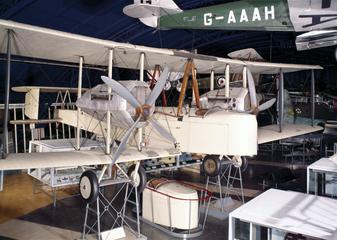
Alcock and Brown's Vickers Vimy Biplane

Alcock and Brown's Vickers Vimy Biplane

1919

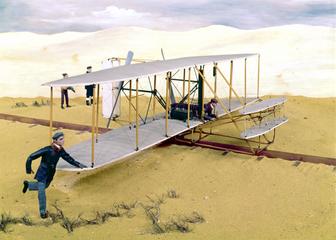
Model of Wright Flyer

Model of Wright Flyer

1903

Section of a Boeing 747, 1973.

Section of a Boeing 747, 1973.

1973

Replica of 1903 Wright Brothers' aero engine

Replica of 1903 Wright Brothers' aero engine

after 1903

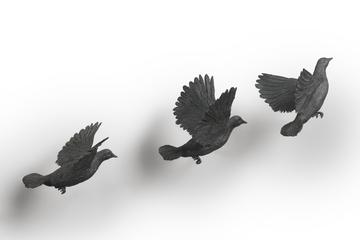
Serial sculpture of bird flight

Serial sculpture of bird flight

1992

Flying model

Flying model

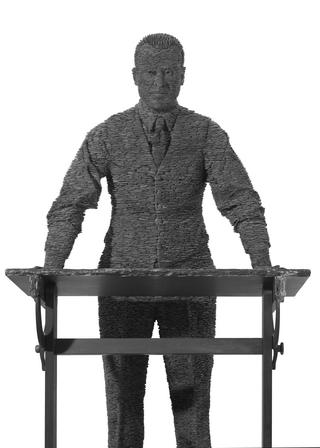
Stone sculpture of R J Mitchell

Stone sculpture of R J Mitchell

2005

Model of Bleriot's Monoplane No. XI

Model of Bleriot's Monoplane No. XI

1962

Charles Green Aeronaut

Charles Green Aeronaut

1836

Medal commemorating the first manned balloon flights

Medal commemorating the first manned balloon flights

1784

Medal commemorating first free balloon stratospheric flight of Professor Auguste Piccard and Dr. Paul Kipfer

Medal commemorating first free balloon stratospheric flight of Professor Auguste Piccard and Dr. Paul Kipfer

1931

Medal commemorating the Montgolfier unmanned balloon ascent

Medal commemorating the Montgolfier unmanned balloon ascent

1783

Medal, 'Le Flesselles' Montgolfier balloon flight, Lyon, France, 19 January 1784

Medal, 'Le Flesselles' Montgolfier balloon flight, Lyon, France, 19 January 1784

1784

Medal, Blanchard's balloon ascent, Nuremberg, Germany, 1787

Medal, Blanchard's balloon ascent, Nuremberg, Germany, 1787

1785

Panorama de Paris

Panorama de Paris

1878

Medal commemorating the Montgolfier unmanned balloon ascent

Medal commemorating the Montgolfier unmanned balloon ascent

1783

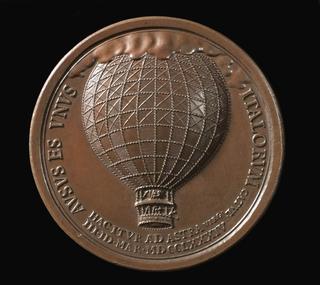
Medal, commemorating the first balloon ascents in Italy

Medal, commemorating the first balloon ascents in Italy

1784

Medal commemorating balloon flight of Blanchard at Frankfurt

Medal commemorating balloon flight of Blanchard at Frankfurt

1785

Body for V1 flying bomb

Body for V1 flying bomb

SE5A fighter, 1917.

SE5A fighter, 1917.

1917

Airframe for Spitfire aircraft. No. P.9444

Airframe for Spitfire aircraft. No. P.9444

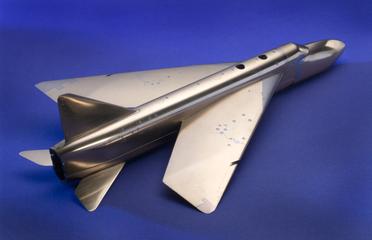
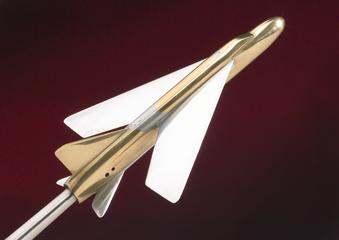
Wind tunnel model of English Electric "Lightning P1.A"

Wind tunnel model of English Electric "Lightning P1.A"

Parabelum light machine gun

Parabelum light machine gun

'Jason I', de Havilland DH.60G Gipsy Moth

'Jason I', de Havilland DH.60G Gipsy Moth

1928

Gloster Aircraft, E28/39, (without engine)

Gloster Aircraft, E28/39, (without engine)

Wind tunnel model of English Electric "Lightning P1.A"

Wind tunnel model of English Electric "Lightning P1.A"

Model of a Montgolfier Balloon, 1783

First Public Demonstration of a Montgolfier Balloon, 4th June, 1783.

1783; 1914

Main undercarriage wheel and tyre of Beardmore "Inflexible"

Main undercarriage wheel and tyre of Beardmore "Inflexible"

Uniform worn by British Caledonian Airways Stewardess, c. 1986-1988.

British Caledonian Airways Uniform

1986-1988

Replica, of the 1903 ‘Wright Flyer’ aircraft, by The de Havilland Aeronautical Technical School, Hatfield, Hertfordshire, England, 1948. The actual 1903 ‘Wright Flyer’: - designed and built by the Wright Brothers: Orville and Wilbur, achieved the world’s first successful heavier-than-air powered flight, on 17th December 1903 at Kitty Hawk, North Carolina, United States.

Replica, 1903 ‘Wright Flyer’ aircraft

1948

Bristol ‘Centaurus’ sleeve-valve radial 18-cylinder aero engine, part-sectioned, by The Bristol Aeroplane Company Limited, Bristol, Somerset, England, 1942-1950

Bristol 'Centaurus' sleeve-valve aero engine, c 1940s.

1942-1950

Hawker P.1127 VSTOL Experimental Aircraft, serial number XP831 (the first prototype), by Hawker Siddeley Aircraft Company Limited, British, 1960

Hawker P 1127 VSTOL Experimental Aircraft

1960

Schneider trophy, 1913, plus wooden plinth c. 1931.

The Schneider Trophy, 1913.

1911-1912

Windak full-pressure flying suit, complete with Taylor Helmet type F., by Windak Ltd, 1962. Pressure suits were developed during the 1930s for high altitude record breaking attempts. There was no real service requirement for full pressure suits until after the Second World War when military aircraft became capable of flying above 40,000 feet. The Windak suit is constructed from a single layer of gas tight rubberised silk bonded to strong cotton. The suit is internally pressurised by air in order to achieve a higher pressure upon the body then exists at high altitude. The pressure visor is electrically heated to prevent misting and closes automatically in an emergency.

Windak full-pressure flying suit

1962

9 H.P. Roe Triplane of 1909

A V Roe's triplane, 1909

1909

Pratt and Whitney Canada PW-120 turbo-prop aero engine, serial number 7126. Prototype flight engine, built 1981-1982

Pratt and Whitney Canada PW-120 turbo-prop aero engine

1981-1982

Model of airship, steam driven dirigible by Henri Giffard 1852, scale 1:50

The Giffard Airship

1852

Model of Ader's first aeroplane, the "Eole", scale 1:10

Ader's 'Eole' flying machine, 1890

1890

Heinkel-Hirth He S 011 Turbo jet aero engine, designed by Hans Joachim Pabst von Ohain and made by Heinkel-Hirth, Germany, 1944

Heinkel-Hirth He S 011 Turbo jet aero engine

1944

Model of Handley Page H.P.42 "Heracles" aircraft, scale 1:24, sectioned.

Handley Page HP42 'Heracles'

1931

Beardmore Heavy Oil engine, diesel engine, Tornado Mark III (No. 35, A.103459), by William Beardmore and Company Limited, Parkhead, Lanarkshire, Scotland, 1928. The Beardmore Heavy Oil engine, diesel engine, Tornado Mark III (No. 35, A.103459) was tested and used in several flight trials on the H.M. Airship R. 101. However, it is thought unlikely that this engine was on the final flight when the H.M. Airship R. 101 crashed.

Beardmore Heavy Oil diesel engine, from Airship R. 101

1928

One snuff box, French, ivory. Painted lid "Battle of Fleurus". Oval, 4 1/2" x 1 1/2".

A balloon at Fleurus, 1794.

1794-1800

Rolls-Royce 'R' aero engine, no. 27, with separated 150 mm length of 8 mm diameter fuel pipe, by Rolls-Royce Limited, England, 1931. This engine was developed for the 1931 Schneider Trophy seaplane and flying boat races. The 1931 races were held at Calshot Spit, Southampton Water, Hampshire, England.

Rolls-Royce 'R' aero engine, no. 27, developed for the 1931 Schneider Trophy

1931

Rolls-Royce RB211-22 turbofan engine s/n 10006, 1970

Rolls-Royce RB211 turbofan aero engine, 1970.

1970

Model of Douglas D.C,-3 aircraft, scale 1:24.

Douglas DC-3 'Dakota', late 1930s.

1939-45

Rolls-Royce 'Eagle' aero engine no. 5244, by Rolls-Royce Limited, England, 1914-1919. Used in the aircraft in which John Alcock (pilot) and Arthur Whitten Brown (navigator) made the first non-stop flight across the Atlantic in June 1919.

Rolls-Royce 'Eagle' aero engine no. 5244

1914-1919

Banshee aerial target remotely piloted aircraft series 300. 1996

Banshee aerial target remotely piloted aircraft

1996

Dowty R391 composite Propeller for Lockheed Martin C130J Hercules Aeroplane, 1997.

Dowty R391 composite Propeller for Lockheed Martin C130J Hercules Aeroplane

1997

Model of Santos-Dumont aeroplane, 14 bis (1906), scale 1:10, by Alberto Santos-Dumont, Paris, France, 1906. With human figure by Barbara Mary Campbell, Kingston-upon-Thames, Greater London, England, 1962.

Model of Santos-Dumont's '14 bis' aeroplane

1906; 1962

Gnome 50 HP 7 Cylinder Rotary aero engine, with metal engine to fuselage gasket, designed by Louis Seguin and Laurent Seguin, and made by Societe des Moteurs Gnome, France, 1908-1914. The engine has seven cylinders, machined out of solid nickel-chrome-steel ingots. The cylinders and crank-chamber revolve around the stationary crankshaft. The carburettor, which is stationary, is of the single-jet type and feeds the engine through the hollow crank shaft. The connecting rods all operate on a single crank pin. Henri Farman used this type of engine to win a prize for the greatest distance flown (180 km), setting a World record.

Gnome 50 HP 7 Cylinder Rotary aero engine

1908-1914