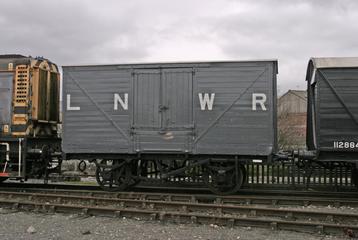
Queen Elizabeth's Saloon
- Made:
- 1941 in Wolverton railway works



 This image is released under a CC BY-NC-SA 4.0
Licence
This image is released under a CC BY-NC-SA 4.0
Licence
License this image for commercial use at Science and Society Picture Library
LicenseThis image is released under a CC BY-NC-SA 4.0
Licence
License this image for commercial use at Science and Society Picture Library
LicenseThis image is released under a CC BY-NC-SA 4.0
Licence
License this image for commercial use at Science and Society Picture Library
LicenseThis image is released under a CC BY-NC-SA 4.0
Licence
License this image for commercial use at Science and Society Picture Library
LicenseThis image is released under a CC BY-NC-SA 4.0
Licence
License this image for commercial use at Science and Society Picture Library
LicenseThis image is released under a CC BY-NC-SA 4.0
Licence
License this image for commercial use at Science and Society Picture Library
License
Science Museum Group Collection
© The Board of Trustees of the Science Museum
Science Museum Group Collection
© The Board of Trustees of the Science Museum
© The Board of Trustees of the Science Museum
Science Museum Group Collection
© The Board of Trustees of the Science Museum
Science Museum Group Collection
© The Board of Trustees of the Science Museum
Science Museum Group Collection
© The Board of Trustees of the Science Museum
Science Museum Group Collection
© The Board of Trustees of the Science Museum
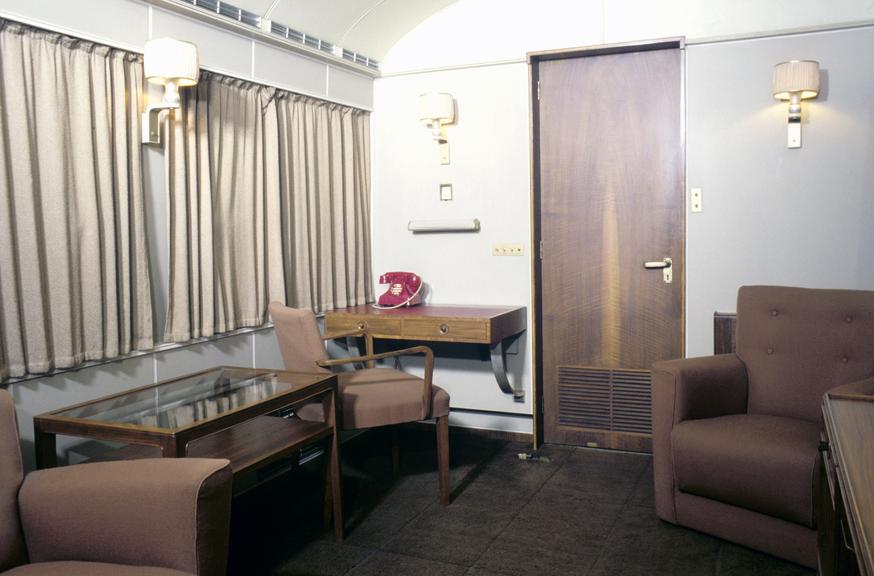
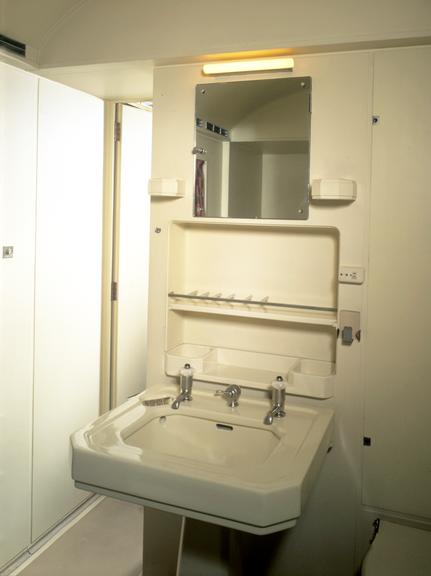
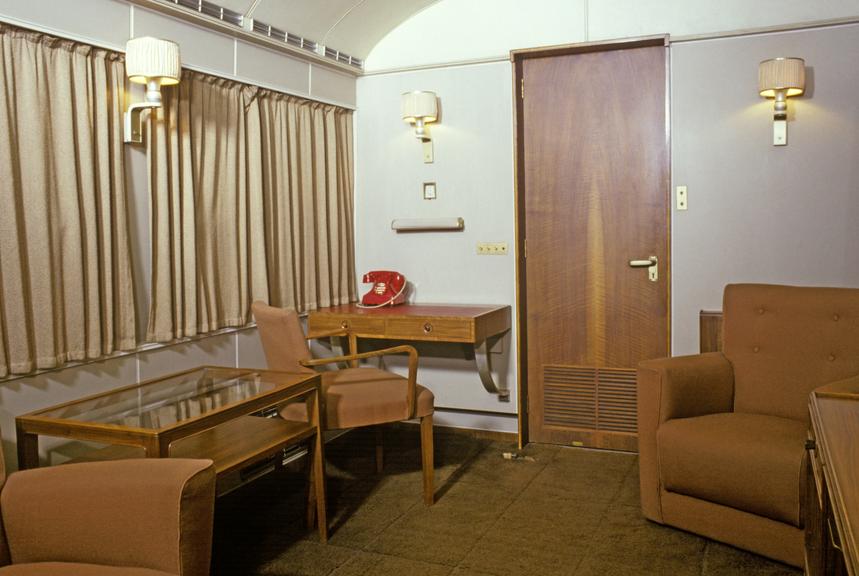
Railway carriage, London Midland & Scottish Railway, Queen Elizabeth the Queen Mother’s Saloon, No. 799, built 1941, Wolverton. Comprises a day compartment, sleeping compartment, a washroom, and accomodation for a lady-in-waiting and footman.
In the 20th century the royal family preferred rail for long-distance journeys. This saloon was part of King George VI’s and Queen Elizabeth II’s royal train.
But during wartime, trains could come under attack. To counter the risk of a bomb from above, this carriage was fitted with armoured plates, which were only removed in 1947.
The carriage had modern conveniences: air conditioning, a thermostat, double-glazed windows and a private telephone for communication throughout the train.
Withdrawn from service in 1977.
Details
- Category:
- Locomotives and Rolling Stock
- Object Number:
- 1983-7006
- Materials:
- aluminium alloy, brass (copper, zinc alloy), copper (alloy), copper plated, enamel, gunmetal, steel (metal), tin (metal), zinc plate, mahogany (wood), oak (wood), pine (wood), paint, rubber (unidentified), vulcanised rubber, glass, polyurethane (varnish), paper (fibre product), cotton (fibre), cotton (textile), leather and plastic (unidentified)
- Measurements:
-
overall (length over buffers): 21692 mm,
- type:
- railway carriage
- credit:
- British Rail, Historical Relics
Related Objects
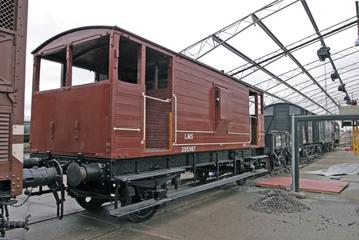
20-ton Goods Brake Van
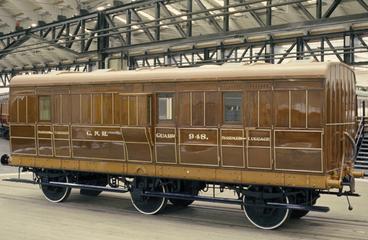
Great Northern Railway brake van
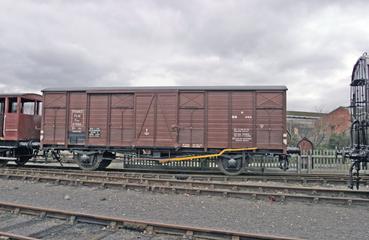
Chemins de Fer de Paris a Lyon et a la Mediterranee (PLM) train ferry van, 1935
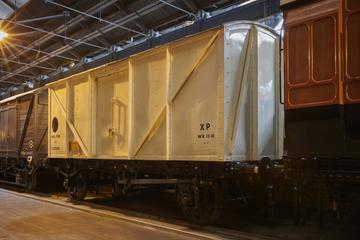
British Railways insulated fish van, 1959